Why visit
Yaoundé is Cameroon's hill-built capital, greener and calmer than Douala, with government districts, markets, museums, and day trips into the surrounding highlands. It is a practical base for southern Cameroon routes.
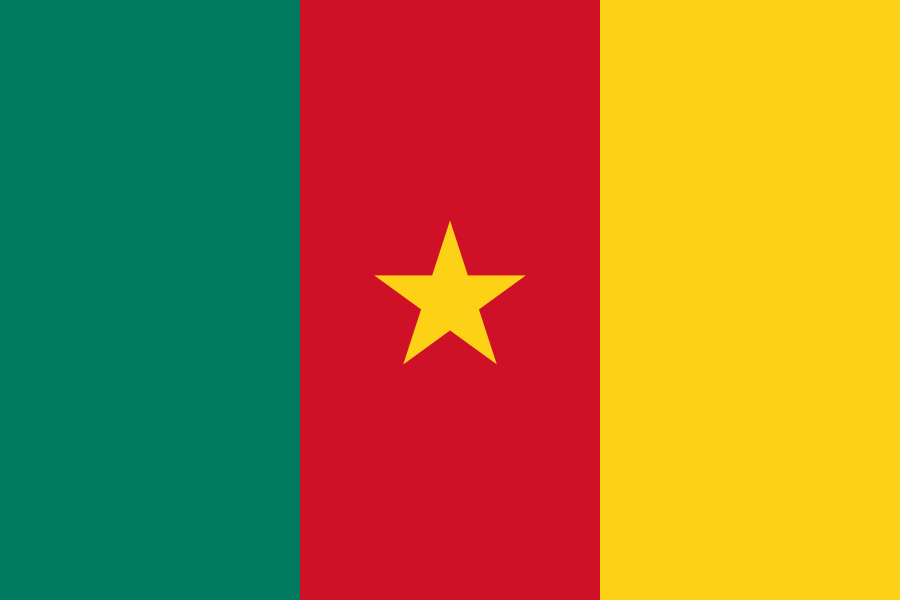
Why visit
Yaoundé is Cameroon's hill-built capital, greener and calmer than Douala, with government districts, markets, museums, and day trips into the surrounding highlands. It is a practical base for southern Cameroon routes.
How to use this result
Yaoundé is useful when you want a city-level starting point in Cameroon. Check whether the capital is the best arrival city, a practical transfer point, or mainly a geography and planning reference.
Before planning around Yaoundé, compare airport access, local transport, time zone, neighborhood choices, weather, safety guidance, and whether another city in Cameroon better matches the trip style.
Yaoundé at a glance
City population
1.3 million
Elevation
726 m
2,382 ft
Time zone
UTC+1
Africa/Douala
Airport
NSI
Yaoundé Nsimalen International Airport
Cameroon at a glance
Country center
6.0°, 12.0°
Coast
Has coastline
Traffic
Drives on the right
Time zones
Single time zone
Country area
475,442 km²
183,569 mi²
Country population
28.6 million
60/km²
Subregion
Middle Africa
Currency
Central African CFA franc (Fr)
XAF
Dial
+237
Languages
English, French
Demonym
Cameroonian
Internet
.cm
UN
Member state
ISO code
CM / CMR
Where in the world
6.0° - 12.0°
Click the map to open in Google Maps. Outline via svg-maps/world - CC BY 4.0
Did you know
Bordering Cameroon
Traveler notes
Plan checks
Explore more
Facts last reviewed June 2026 against GeoNames and national statistics sources. See the editorial policy for how destination data is maintained.
Frequently asked about Yaoundé
Yaoundé is the capital city of Cameroon. It has a population of about 1.3 million. The city sits at 726 m above sea level.
Yaoundé uses the Central African CFA franc (Fr), ISO code XAF.
The primary languages are English and French.
The calling code is +237.
Nov–Feb. Check current weather and local events before booking.
Yaoundé Nsimalen International Airport (IATA: NSI).
Other Africa destinations
Côte d'Ivoire
Côte d'Ivoire pairs Abidjan's lagoon-side energy with surf at Assinie, the colonial quarter of Grand-Bassam, and the world's largest church dome in Yamoussoukro. Comoé and Taï national parks protect West African rainforest.
Djibouti
Djibouti is a geological showpiece where three rift systems meet: Lake Assal sits 155 m below sea level, Lake Abbé bristles with limestone chimneys, and whale sharks gather in the Gulf of Tadjoura every winter.

Egypt
Egypt pairs the Giza pyramids, Luxor temples, and Abu Simbel with Red Sea reefs at Dahab and Hurghada. A Nile cruise is the classic seven-night frame; Cairo adds the Grand Egyptian Museum.
Equatorial Guinea
Equatorial Guinea is the only Spanish-speaking country in Africa, split between the mainland and Bioko island. Pico Basilé rises above Malabo, and the southern Bioko beaches host nesting sea turtles.
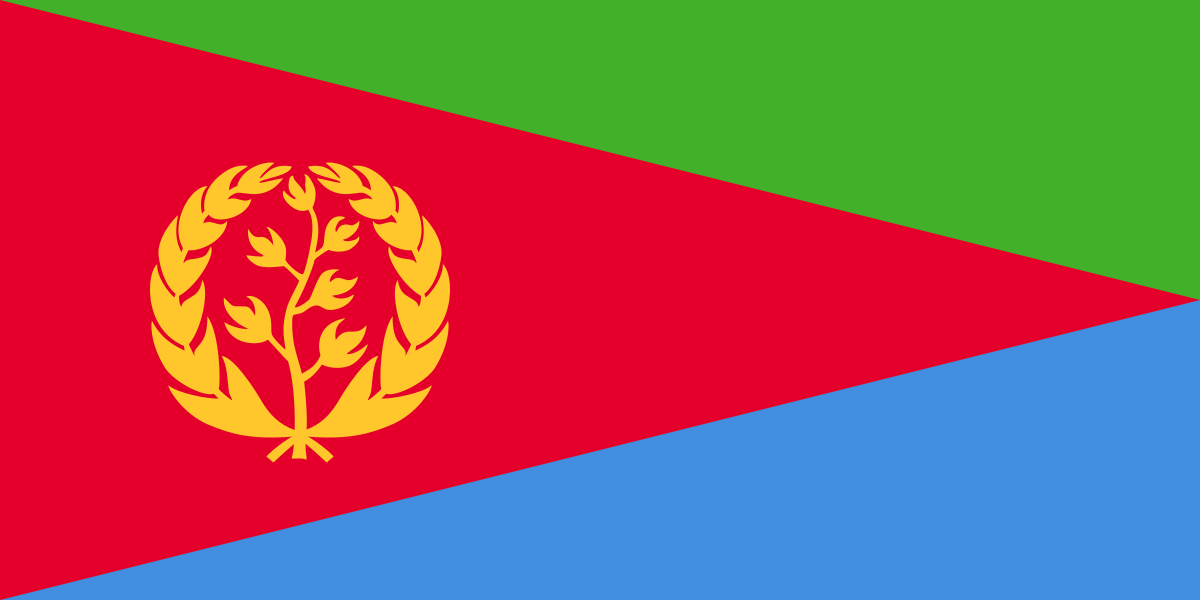
Eritrea
Eritrea's capital Asmara is a UNESCO-listed time capsule of Italian modernist architecture, and the Dahlak Archipelago holds nearly untouched Red Sea reefs. Independent travel is tightly controlled and permits are required outside Asmara.
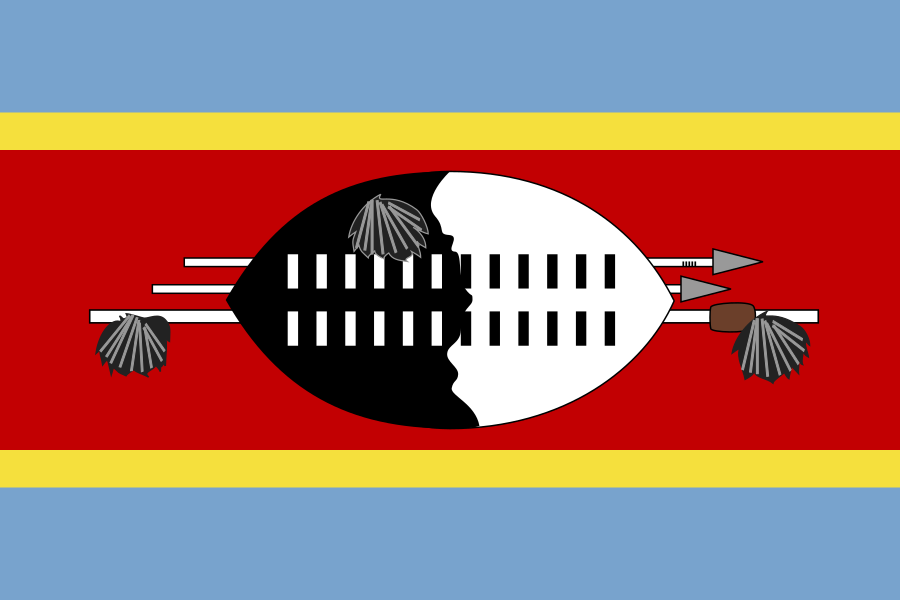
Eswatini
Eswatini (formerly Swaziland) packs rhino tracking in Hlane, the Malolotja highlands, and a living monarchy's ceremonial calendar into one of Africa's smallest countries. It slots neatly into a South Africa road trip.