Why visit
São Tomé is a small equatorial capital of pastel buildings, seafront streets, cocoa history, and easy access to beaches and rainforest. It gives the islands a relaxed civic center before wilder Príncipe or interior trips.
Why visit
São Tomé is a small equatorial capital of pastel buildings, seafront streets, cocoa history, and easy access to beaches and rainforest. It gives the islands a relaxed civic center before wilder Príncipe or interior trips.
How to use this result
São Tomé is useful when you want a city-level starting point in São Tomé & Príncipe. Check whether the capital is the best arrival city, a practical transfer point, or mainly a geography and planning reference.
Before planning around São Tomé, compare airport access, local transport, time zone, neighborhood choices, weather, safety guidance, and whether another city in São Tomé & Príncipe better matches the trip style.
São Tomé at a glance
City population
53k
Elevation
140 m
459 ft
Time zone
UTC+0
Africa/Sao_Tome
Airport
TMS
São Tomé International Airport
São Tomé & Príncipe at a glance
Country center
1.0°, 7.0°
Coast
Has coastline
Traffic
Drives on the right
Time zones
Single time zone
Country area
964 km²
372 mi²
Subregion
Middle Africa
Currency
São Tomé and Príncipe dobra (Db)
STN
Dial
+239
Language
Portuguese
Demonym
Sao Tomean
Internet
.st
UN
Member state
ISO code
ST / STP
Where in the world
1.0° - 7.0°
Click the map to open in Google Maps. Outline via svg-maps/world - CC BY 4.0
Did you know
Traveler notes
Plan checks
Explore more
Facts last reviewed June 2026 against GeoNames and national statistics sources. See the editorial policy for how destination data is maintained.
Frequently asked about São Tomé
São Tomé is the capital city of São Tomé & Príncipe. It has a population of about 53k. The city sits at 140 m above sea level.
São Tomé uses the São Tomé and Príncipe dobra (Db), ISO code STN.
The primary language is Portuguese.
The calling code is +239.
Jun–Sep, Dec–Feb. Check current weather and local events before booking.
São Tomé International Airport (IATA: TMS).
Other Africa destinations
Libya
Libya holds Leptis Magna and Sabratha, two of the Mediterranean's greatest Roman cities, and the prehistoric rock art of the Acacus mountains. Conventional tourism is currently very limited; the sites wait for calmer years.
Madagascar
Madagascar split from the continents 88 million years ago and kept its own cast: lemurs, baobab avenues, and the limestone needles of Tsingy de Bemaraha. Distances are huge and roads are slow, so itineraries need discipline.
Malawi
Malawi is built around its lake: a 580 km inland sea with clear water, cichlid fish found nowhere else, and beach lodges from backpacker to boutique. Liwonde and Majete parks have restocked into genuine safari destinations.
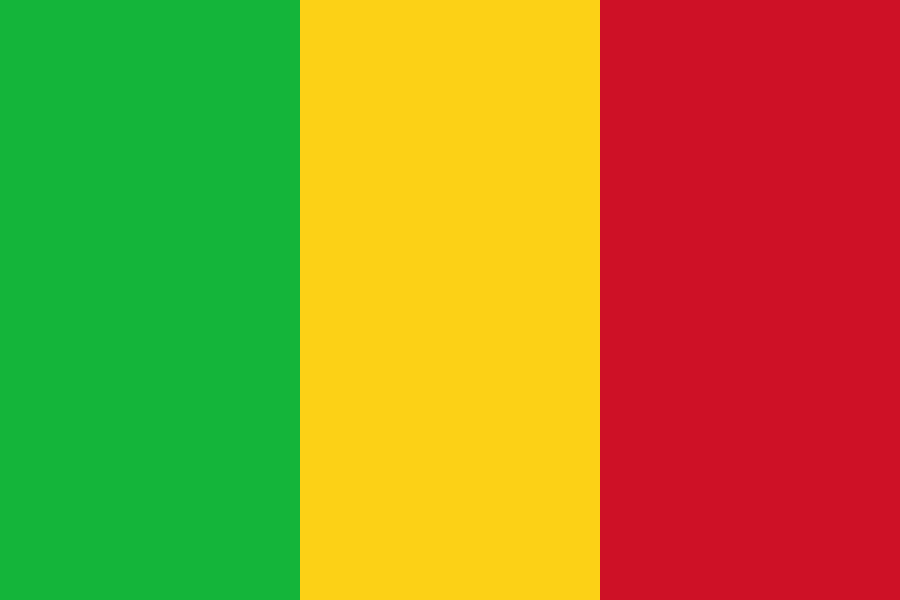
Mali
Mali carries some of Africa's most storied places: Timbuktu, Djenné's Great Mosque, and the Dogon escarpment. Security conditions have made most of the country off-limits to travelers for years; the heritage endures.
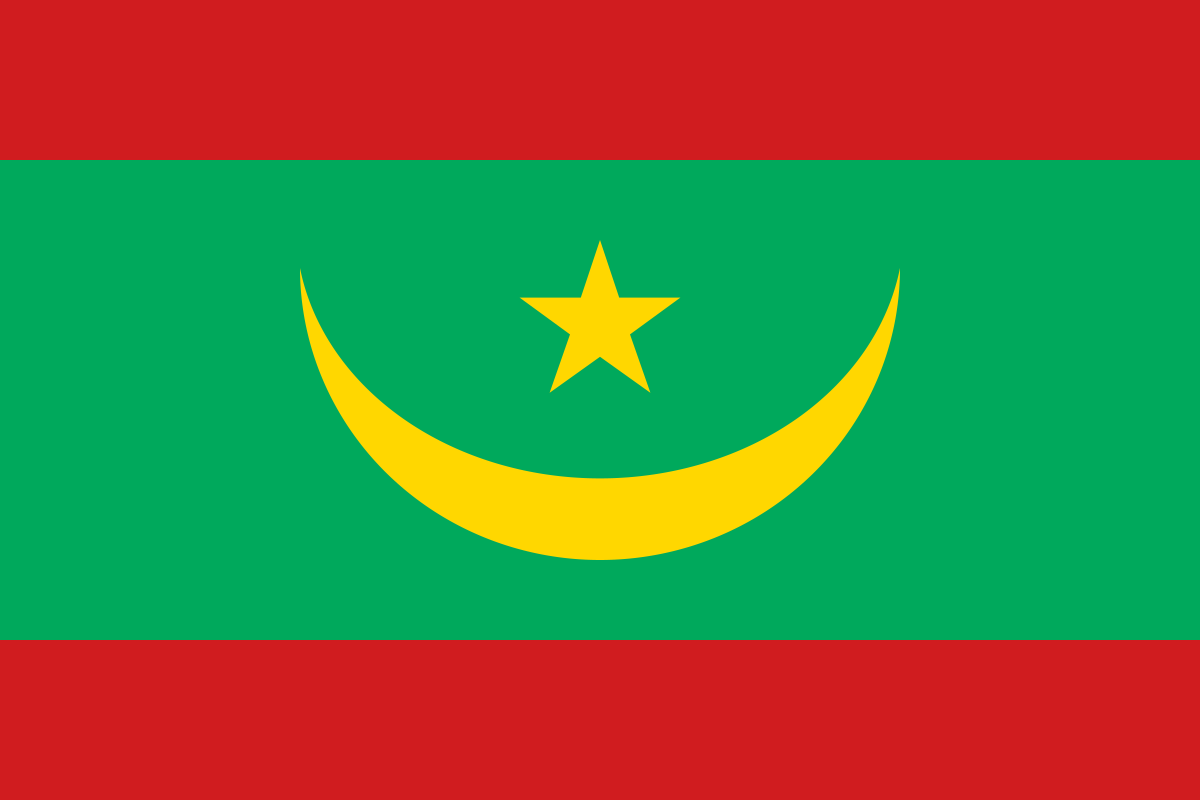
Mauritania
Mauritania is deep Sahara: the ancient caravan libraries of Chinguetti, the Adrar plateau, the world's longest iron-ore train, and the Banc d'Arguin, where the desert meets a bird-filled Atlantic.

Mauritius
Mauritius is an Indian Ocean destination with lagoons, Creole food, and volcanic interiors. Best paired with slow travel rather than island-hopping.