Why visit
Uganda is gorilla trekking in Bwindi's Impenetrable Forest, chimpanzees in Kibale, tree-climbing lions in Queen Elizabeth, and the Nile exploding out of Lake Victoria at Jinja, East Africa's adventure-sports base.
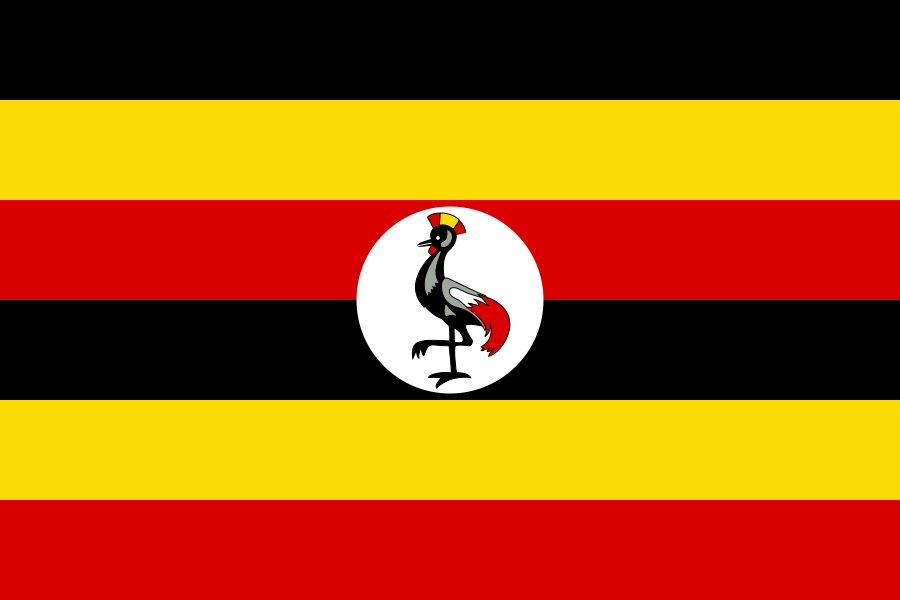
Country - Africa
Why visit
Uganda is gorilla trekking in Bwindi's Impenetrable Forest, chimpanzees in Kibale, tree-climbing lions in Queen Elizabeth, and the Nile exploding out of Lake Victoria at Jinja, East Africa's adventure-sports base.
How to use this result
Uganda works best as a first-pass travel idea. Start with the region, season, and themes on this page, then compare flights, entry rules, safety guidance, and local transport before treating it as a real option.
Use Kampala as the administrative starting point, then check whether the strongest trip idea is actually the capital, a coastal area, a nature route, or another city in Uganda.
At a glance
Location
1.0°, 32.0°
Coast
Landlocked
Traffic
Drives on the left
Time zones
Single time zone
Country area
241,550 km²
93,263 mi²
Country population
48.6 million
201/km²
Subregion
Eastern Africa
Currency
Ugandan shilling (Sh)
UGX
Dial
+256
Languages
English, Swahili
Demonym
Ugandan
Internet
.ug
UN
Member state
ISO code
UG / UGA
Where in the world
1.0° - 32.0°
Click the map to open in Google Maps. Outline via svg-maps/world - CC BY 4.0
Did you know
Bordering Uganda
Traveler notes
Plan checks
Explore more
Facts last reviewed June 2026 against GeoNames and national statistics sources. See the editorial policy for how destination data is maintained.
Frequently asked about Uganda
Kampala is the capital of Uganda.
Uganda uses the Ugandan shilling (Sh), ISO code UGX.
The primary languages are English and Swahili.
Yes, Uganda is landlocked: it has no sea coastline.
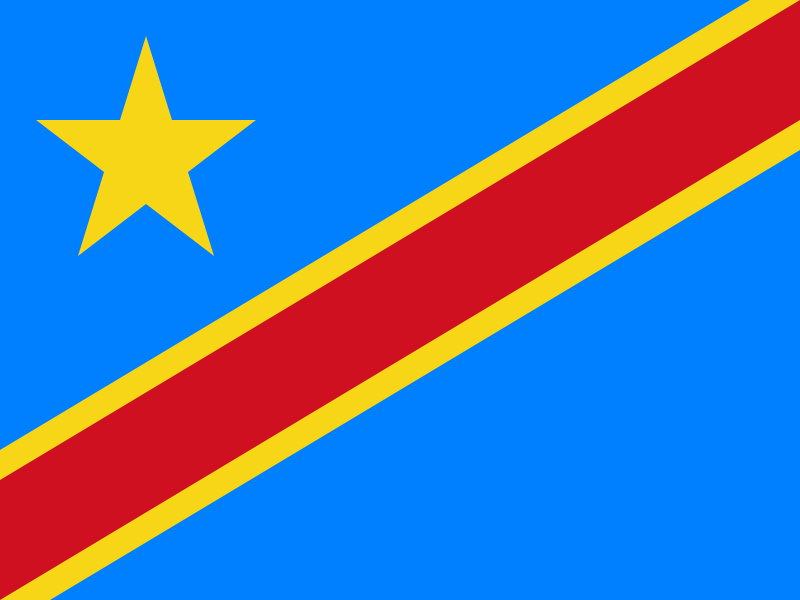
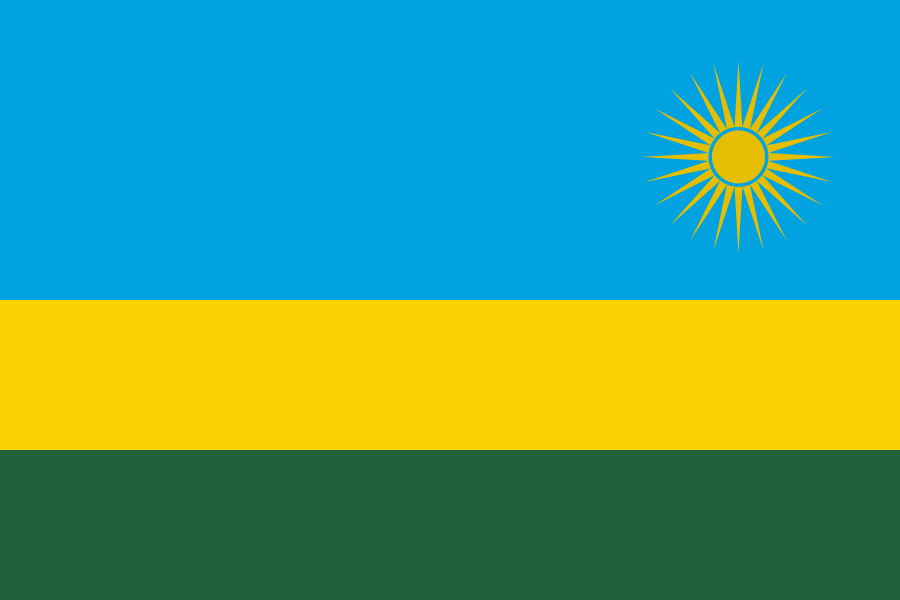
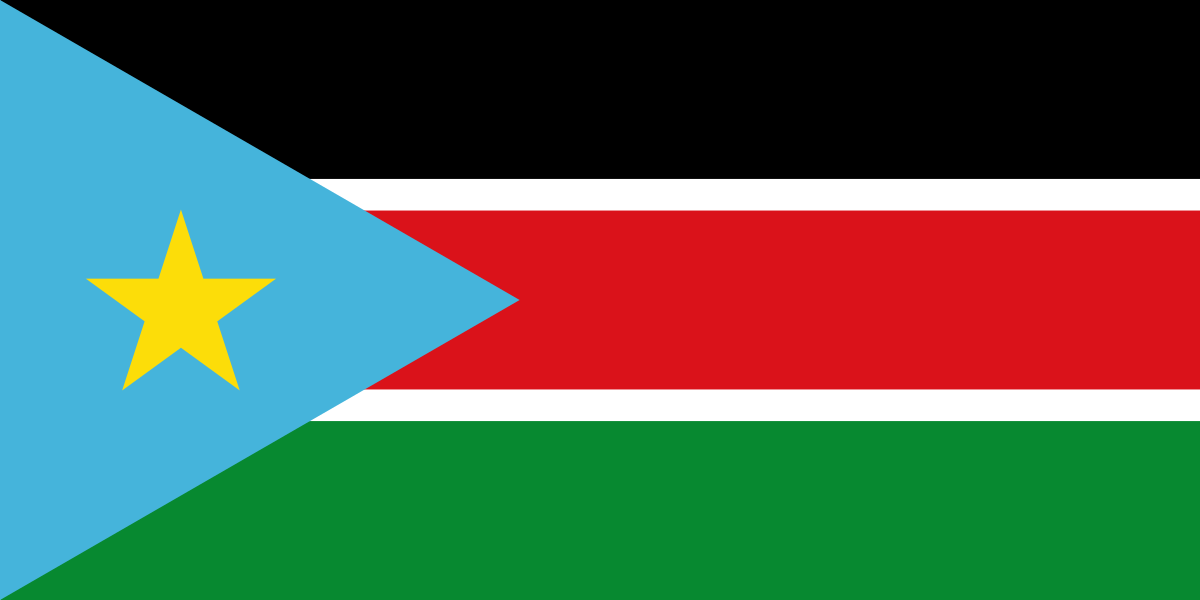
Uganda borders Democratic Republic of the Congo, Kenya, Rwanda, South Sudan, Tanzania.
The calling code is +256.
Jun–Aug, Dec–Feb. Check current weather and local events before booking.
Other Africa destinations

Kenya
Kenya is the safari benchmark. Maasai Mara, Amboseli with Kilimanjaro views, and Samburu in the north. And closes with Indian Ocean beaches at Diani and Lamu.
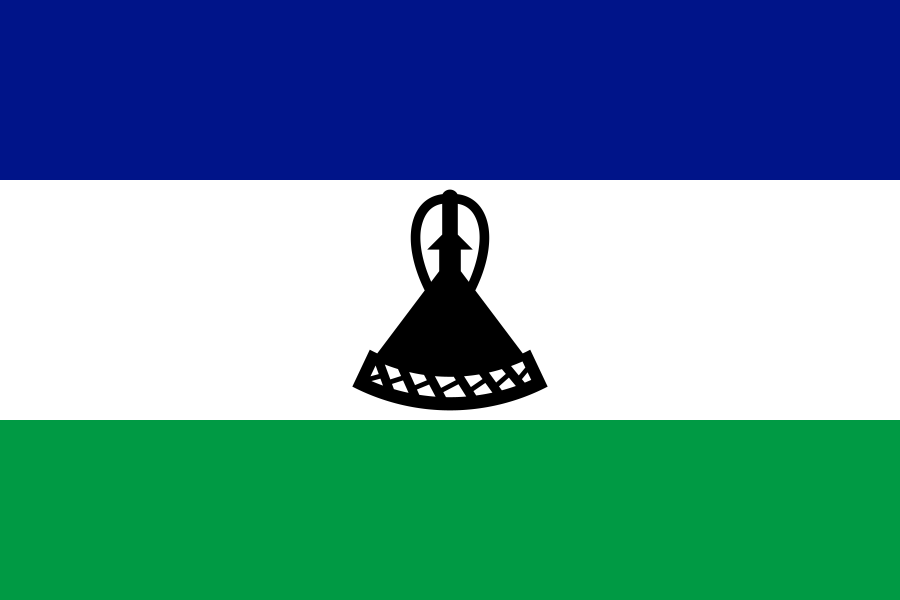
Lesotho
Lesotho is the only country on earth entirely above 1,000 m. Pony treks between mountain villages, the Sani Pass switchbacks from South Africa, and Afriski, one of Africa's two ski resorts.
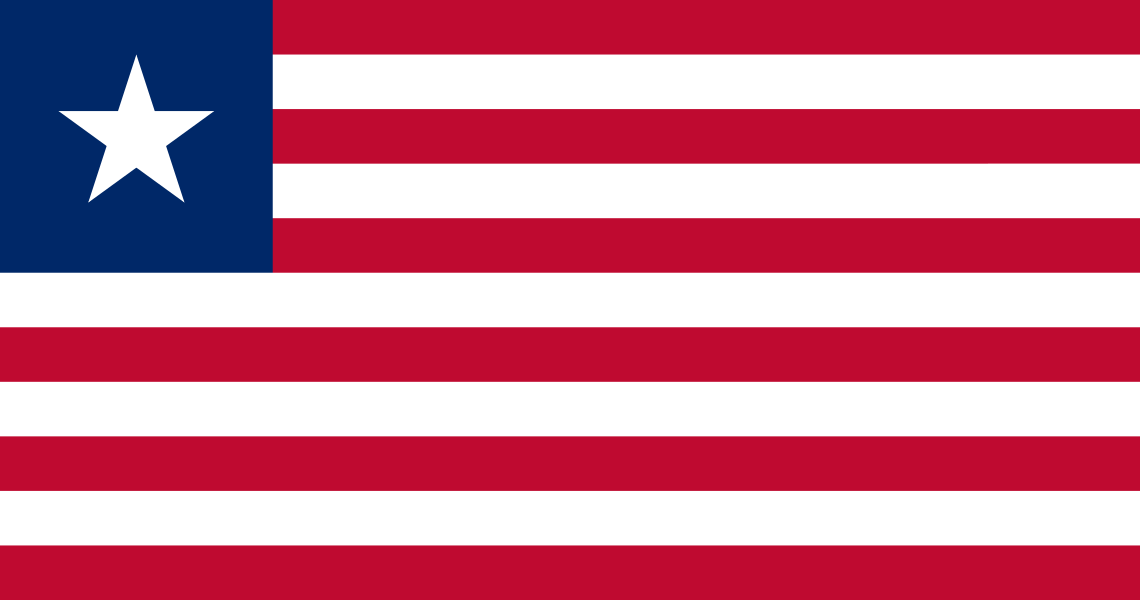
Liberia
Liberia, founded by freed American settlers, has West Africa's best surf at Robertsport and the chimpanzee research island of Monrovia's outskirts. Sapo National Park protects a large block of Upper Guinean rainforest.
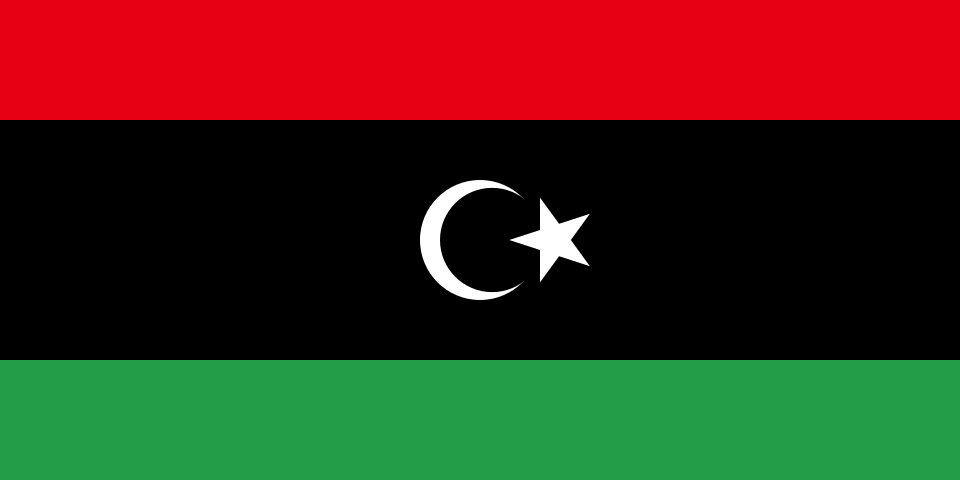
Libya
Libya holds Leptis Magna and Sabratha, two of the Mediterranean's greatest Roman cities, and the prehistoric rock art of the Acacus mountains. Conventional tourism is currently very limited; the sites wait for calmer years.
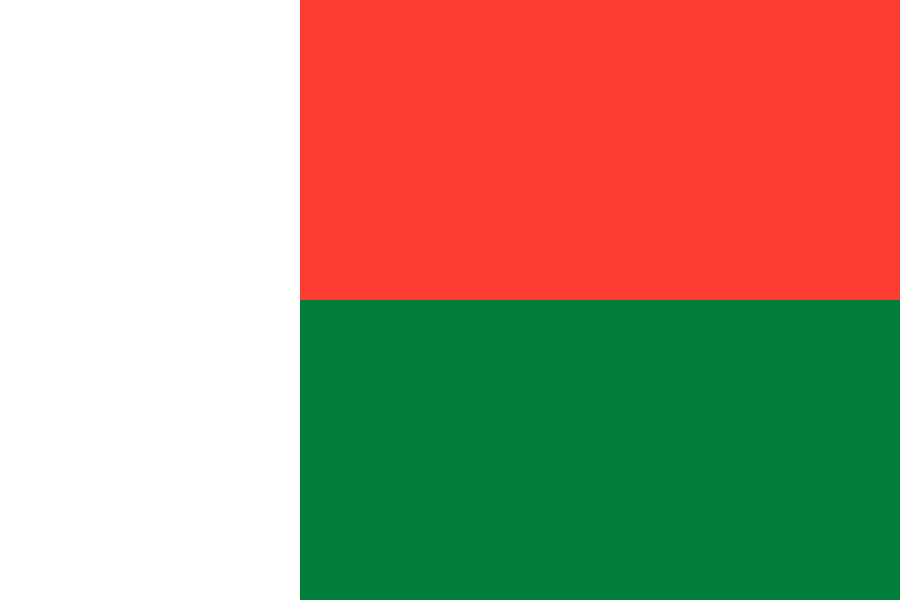
Madagascar
Madagascar split from the continents 88 million years ago and kept its own cast: lemurs, baobab avenues, and the limestone needles of Tsingy de Bemaraha. Distances are huge and roads are slow, so itineraries need discipline.
Malawi
Malawi is built around its lake: a 580 km inland sea with clear water, cichlid fish found nowhere else, and beach lodges from backpacker to boutique. Liwonde and Majete parks have restocked into genuine safari destinations.