Why visit
Tajikistan is the Pamir Highway: the world's second-highest international road, running past 7,000 m peaks, Wakhan Valley forts facing Afghanistan, and homestays that define Central Asian hospitality.
Country - Asia
Why visit
Tajikistan is the Pamir Highway: the world's second-highest international road, running past 7,000 m peaks, Wakhan Valley forts facing Afghanistan, and homestays that define Central Asian hospitality.
How to use this result
Tajikistan works best as a first-pass travel idea. Start with the region, season, and themes on this page, then compare flights, entry rules, safety guidance, and local transport before treating it as a real option.
Use Dushanbe as the administrative starting point, then check whether the strongest trip idea is actually the capital, a coastal area, a nature route, or another city in Tajikistan.
At a glance
Location
39.0°, 71.0°
Coast
Landlocked
Traffic
Drives on the right
Time zones
Single time zone
Country area
143,100 km²
55,251 mi²
Country population
10.1 million
71/km²
Subregion
Central Asia
Currency
Tajikistani somoni (ЅМ)
TJS
Dial
+992
Languages
Russian, Tajik
Demonym
Tadzhik
Internet
.tj
UN
Member state
ISO code
TJ / TJK
Where in the world
39.0° - 71.0°
Click the map to open in Google Maps. Outline via svg-maps/world - CC BY 4.0
Did you know
Bordering Tajikistan
Traveler notes
Plan checks
Explore more
Facts last reviewed June 2026 against GeoNames and national statistics sources. See the editorial policy for how destination data is maintained.
Frequently asked about Tajikistan
Dushanbe is the capital of Tajikistan.
Tajikistan uses the Tajikistani somoni (ЅМ), ISO code TJS.
The primary languages are Russian and Tajik.
Yes, Tajikistan is landlocked: it has no sea coastline.
Tajikistan borders Afghanistan, China, Kyrgyzstan, Uzbekistan.
The calling code is +992.
Jun–Sep. Check current weather and local events before booking.
Other Asia destinations
Kazakhstan
Kazakhstan is the world's largest landlocked country: the Charyn Canyon, Big Almaty Lake, singing dunes in Altyn-Emel, and Almaty's leafy, mountain-backed boulevards. Winter adds cheap, empty skiing at Shymbulak.

Kuwait
Kuwait is an oil-era city-state on a natural Gulf harbor, with the Kuwait Towers, a serious Islamic art collection, and a dhow-trading past remembered along the corniche. It sees few leisure travelers, which makes it easy to cover in two days.
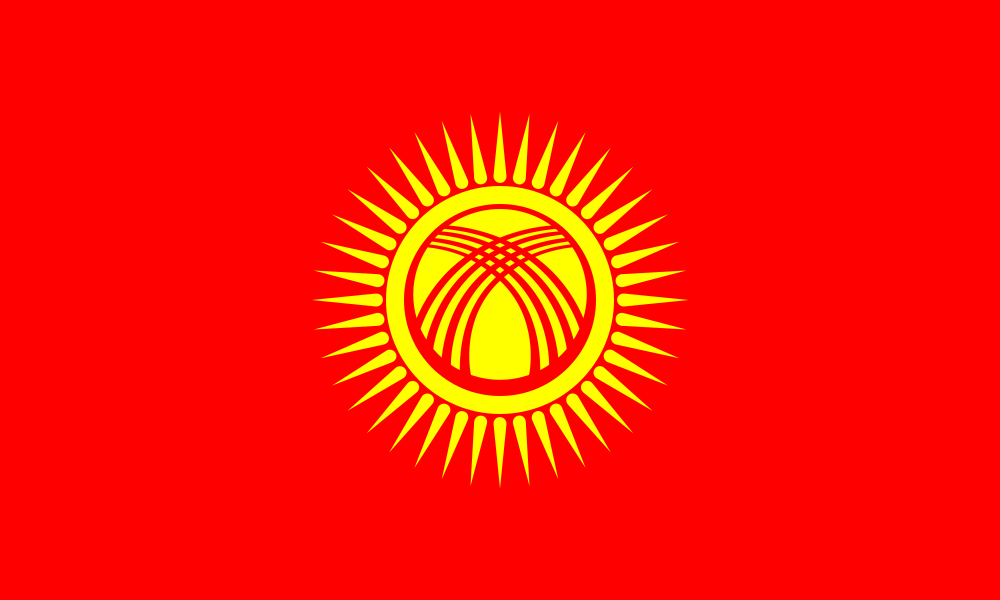
Kyrgyzstan
Kyrgyzstan is the budget Switzerland of Central Asia: Song-Kul's summer yurt camps, Ala-Archa's glacier valleys, and the world's second-largest alpine lake at Issyk-Kul, all organized through a strong community-based tourism network.
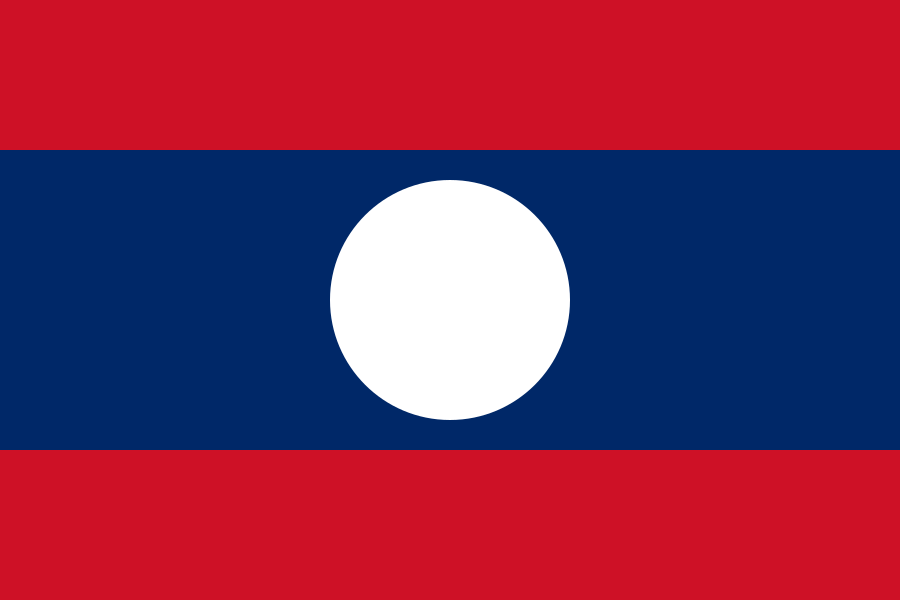
Laos
Laos is the slow boat down the Mekong, Luang Prabang's gilded monasteries and morning alms, the Plain of Jars, and Vang Vieng's karst country, now more about kayaking and hot-air balloons than its old party reputation.
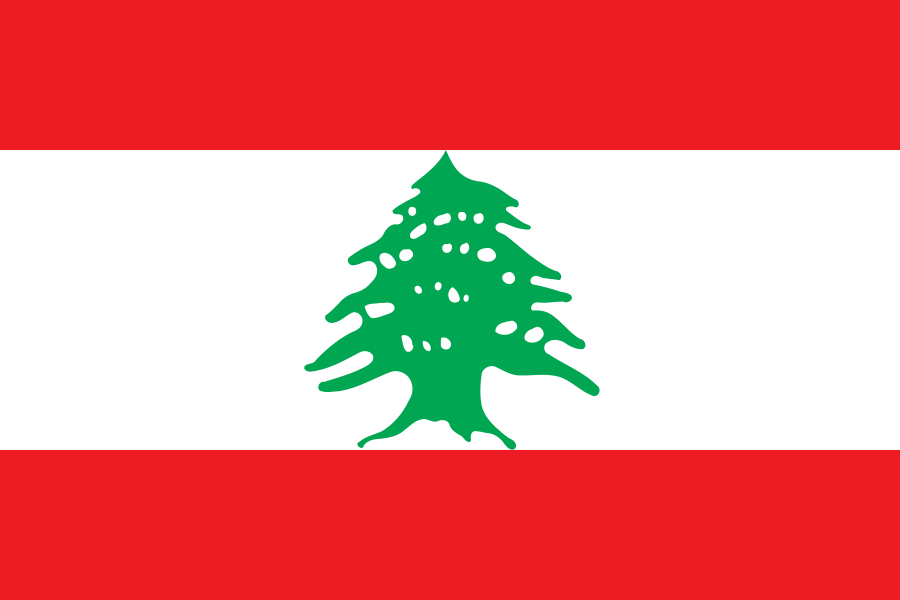
Lebanon
Lebanon compresses Roman Baalbek, Byblos' 7,000-year-old harbor, Beirut's restaurant scene, and ski-to-sea geography into a country two hours across. Economic crisis and regional tension make timing matter; the welcome never wavers.

Malaysia
Malaysia mixes KL's towers, Penang's UNESCO food city, Borneo rainforests, and the Perhentian and Redang islands. English-speaking, affordable, and easy for first-timers.