Why visit
Stockholm sprawls across 14 islands connected by bridges and ferries. Gamla Stan's medieval alleys, Djurgården's museums, Södermalm's hip cafés, and the archipelago.

Why visit
Stockholm sprawls across 14 islands connected by bridges and ferries. Gamla Stan's medieval alleys, Djurgården's museums, Södermalm's hip cafés, and the archipelago.
Country
Region
Europe
How to use this result
Stockholm is useful when you want a city-level starting point in Sweden. Check whether the capital is the best arrival city, a practical transfer point, or mainly a geography and planning reference.
Before planning around Stockholm, compare airport access, local transport, time zone, neighborhood choices, weather, safety guidance, and whether another city in Sweden better matches the trip style.
Stockholm at a glance
City population
980k
Metro: 2.4 million
Elevation
28 m
92 ft
Time zone
UTC+1 (UTC+2 DST)
Europe/Stockholm
Airport
ARN
Stockholm Arlanda
Founded
1252
Getting around
Tunnelbana (3 lines, art-filled stations), commuter rail, ferries
Signature dish
Köttbullar (meatballs), gravlax, smörgåstårta, kanelbulle
Neighborhoods for travelers
Sweden at a glance
Country center
62.0°, 15.0°
Coast
Has coastline
Traffic
Drives on the right
Time zones
Single time zone
Country area
450,295 km²
173,860 mi²
Country population
10.6 million
24/km²
Subregion
Northern Europe
Currency
Swedish krona (kr)
SEK
Dial
+46
Language
Swedish
Demonym
Swedish
Internet
.se
UN
Member state
ISO code
SE / SWE
Where in the world
62.0° - 15.0°
Click the map to open in Google Maps. Outline via svg-maps/world - CC BY 4.0
Did you know
Bordering Sweden
Traveler notes
Plan checks
Explore more
Facts last reviewed June 2026 against GeoNames and national statistics sources. See the editorial policy for how destination data is maintained.
Frequently asked about Stockholm
Stockholm is the capital city of Sweden. It has a population of about 980k. The city sits at 28 m above sea level.
Stockholm uses the Swedish krona (kr), ISO code SEK.
The primary language is Swedish.
The calling code is +46.
Stockholm Arlanda (IATA: ARN).
Other Europe destinations

Latvia
Latvia balances Riga's Art Nouveau streets, Baltic beaches at Jurmala, Gauja National Park castles, and a strong song and folk tradition. It is a practical first Baltic trip, especially by train or bus from Estonia or Lithuania.
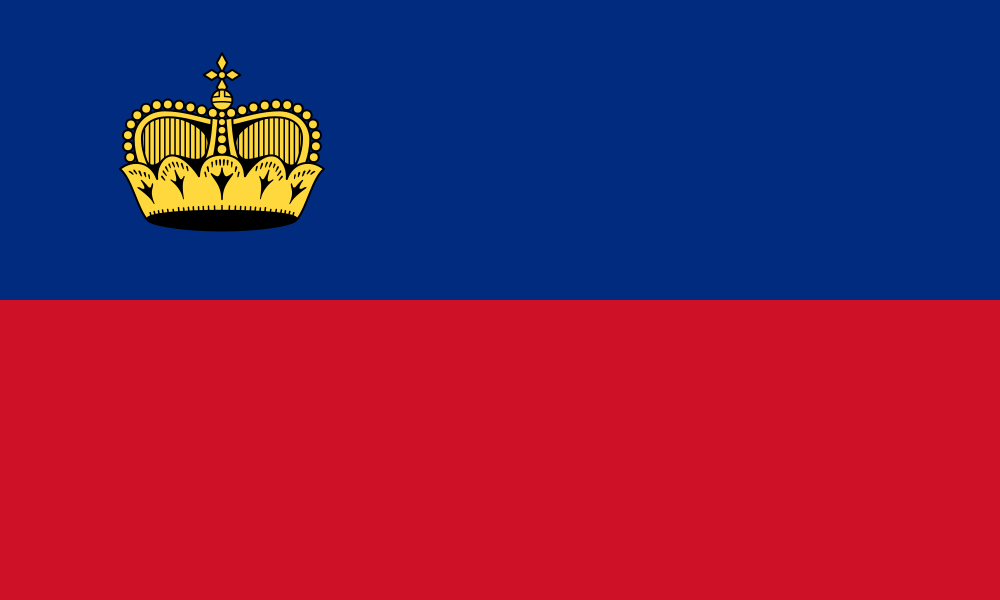
Liechtenstein
Liechtenstein is a tiny Alpine principality between Switzerland and Austria, with Vaduz Castle above the Rhine valley and hiking trails rising quickly into the mountains. It suits travelers who like compact, precise, scenic side trips.

Lithuania
Lithuania combines Vilnius's baroque old town, Trakai Island Castle, Kaunas modernism, and the wind-shaped Curonian Spit. It has the deepest historical capital story of the Baltic states and strong food traditions.
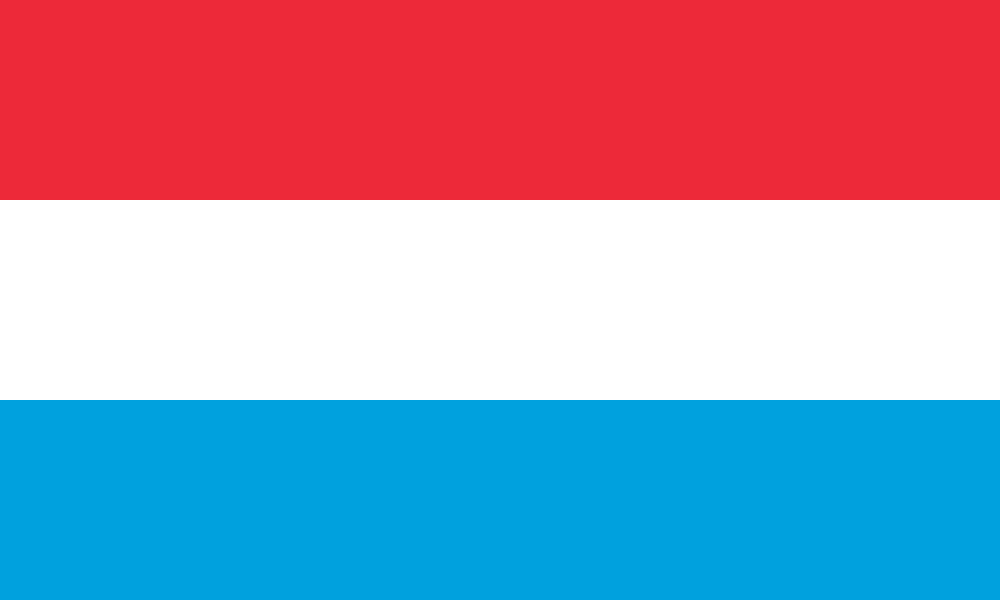
Luxembourg
Luxembourg turns a small country into layered travel: fortress casemates, old quarters, Moselle vineyards, Ardennes castles, and excellent public transport. It works well as a low-stress base between Belgium, France, and Germany.
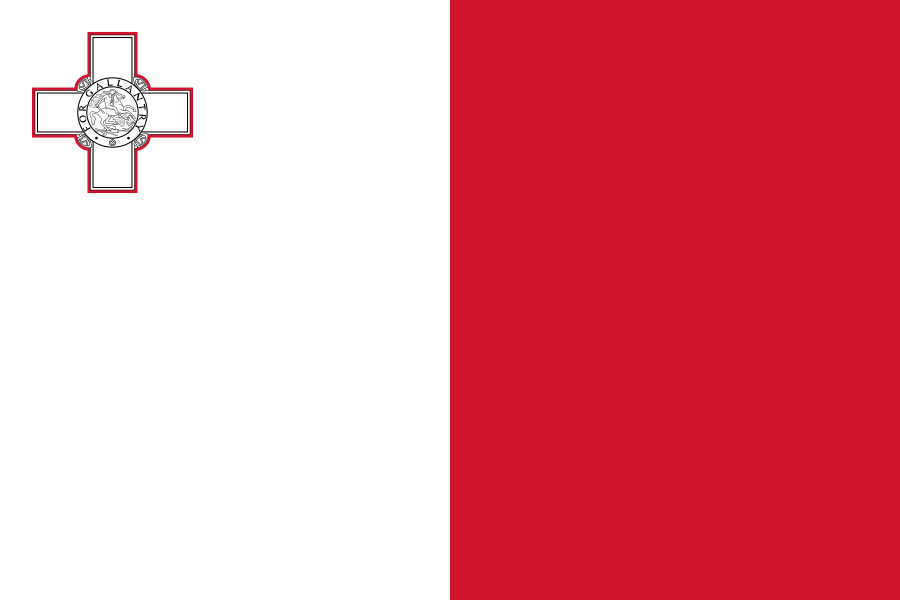
Malta
Malta compresses Valletta, Mdina, megalithic temples, limestone harbors, and clear-water coves into a small island country. Gozo slows the pace, while Malta itself is dense with British, Arab, Italian, and Knights of St John layers.
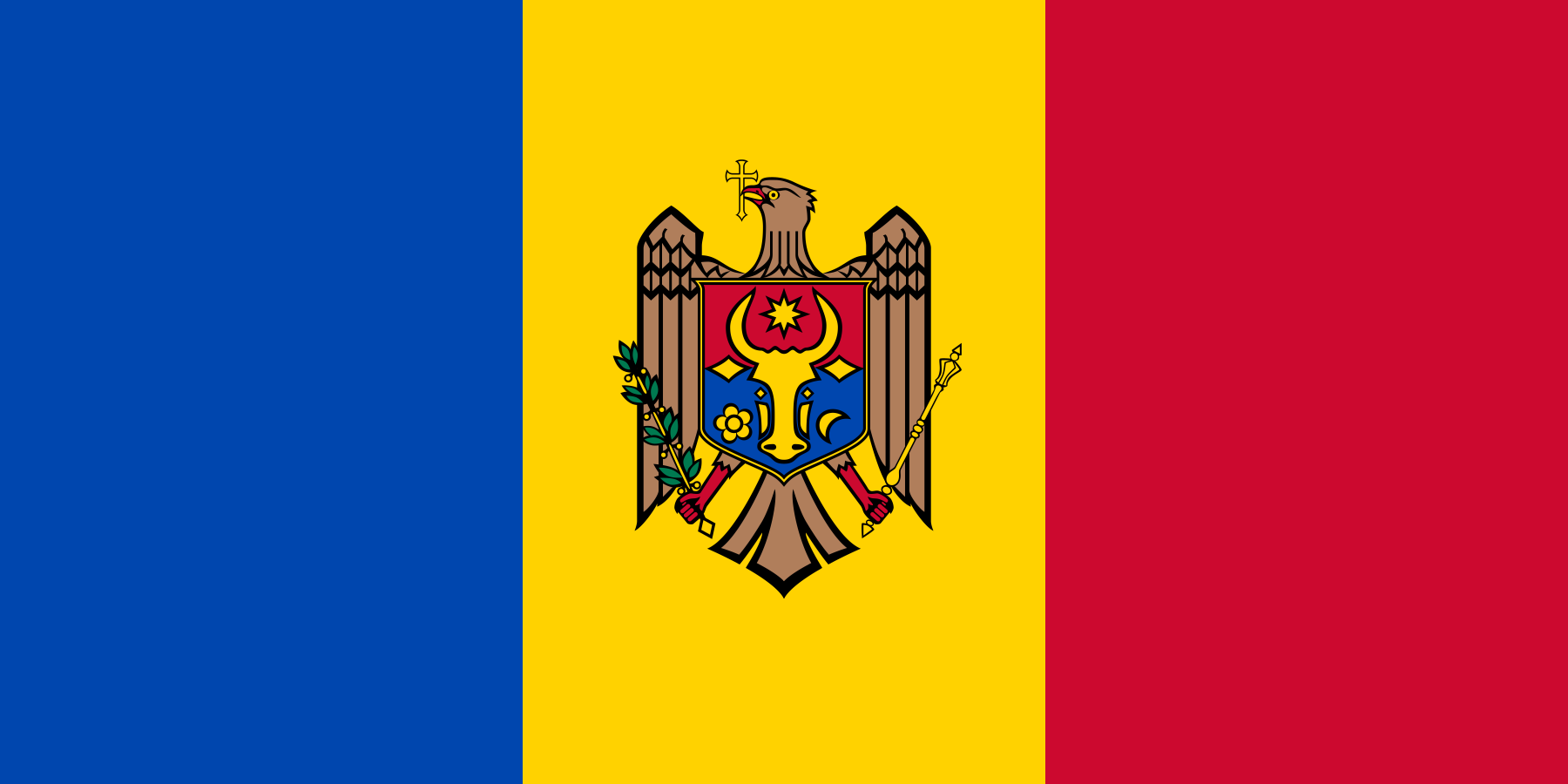
Moldova
Moldova is a quiet wine-country trip between Romania and Ukraine, centered on Chisinau, Orheiul Vechi, cave monasteries, and vast underground cellars. It rewards travelers who like food, rural life, and low-key discovery.

