Why visit
Luxembourg turns a small country into layered travel: fortress casemates, old quarters, Moselle vineyards, Ardennes castles, and excellent public transport. It works well as a low-stress base between Belgium, France, and Germany.
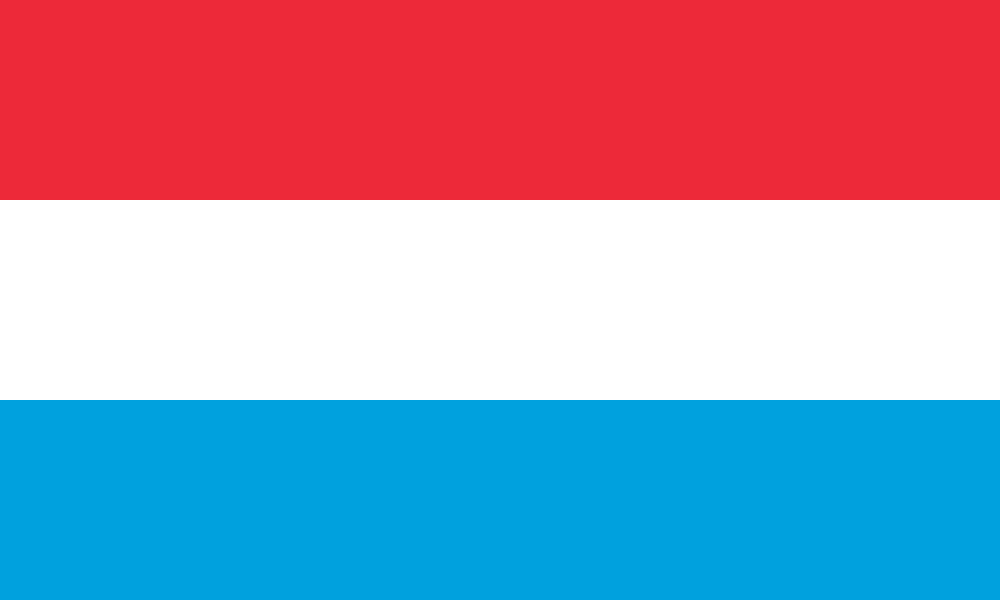
Country - Europe
Why visit
Luxembourg turns a small country into layered travel: fortress casemates, old quarters, Moselle vineyards, Ardennes castles, and excellent public transport. It works well as a low-stress base between Belgium, France, and Germany.
How to use this result
Luxembourg works best as a first-pass travel idea. Start with the region, season, and themes on this page, then compare flights, entry rules, safety guidance, and local transport before treating it as a real option.
Use Luxembourg as the administrative starting point, then check whether the strongest trip idea is actually the capital, a coastal area, a nature route, or another city in Luxembourg.
At a glance
Location
49.8°, 6.2°
Coast
Landlocked
Traffic
Drives on the right
Time zones
Single time zone
Country area
2,586 km²
998 mi²
Country population
670k
259/km²
Subregion
Western Europe
Currency
Euro (€)
EUR
Dial
+352
Languages
German, French, Luxembourgish
Demonym
Luxembourger
Internet
.lu
UN
Member state
ISO code
LU / LUX
Where in the world
49.8° - 6.2°
Click the map to open in Google Maps. Outline via svg-maps/world - CC BY 4.0
Did you know
Bordering Luxembourg
Traveler notes
Plan checks
Explore more
Facts last reviewed June 2026 against GeoNames and national statistics sources. See the editorial policy for how destination data is maintained.
Frequently asked about Luxembourg
Luxembourg is the capital of Luxembourg.
Luxembourg uses the Euro (€), ISO code EUR.
The primary languages are German, French and Luxembourgish.
Yes, Luxembourg is landlocked: it has no sea coastline.
Luxembourg borders Belgium, France, Germany.
The calling code is +352.
May–Sep. Check current weather and local events before booking.
Other Europe destinations
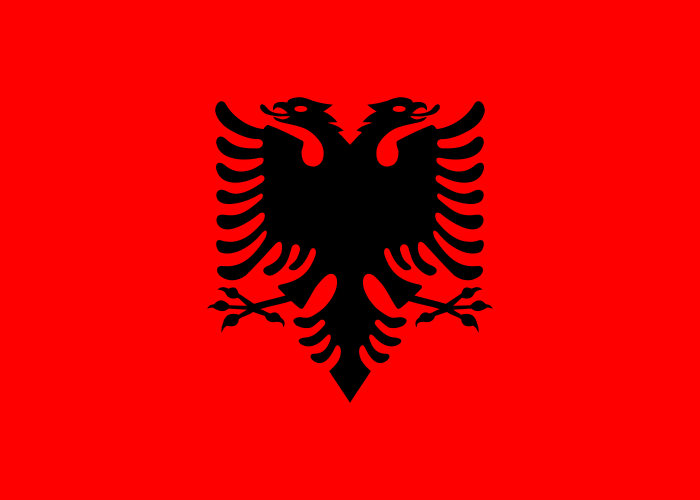
Albania
Albania is Europe's last affordable coast. Riviera beaches at Ksamil, Ottoman Berat and Gjirokastër, the Albanian Alps for hiking, and Tirana's growing food scene.
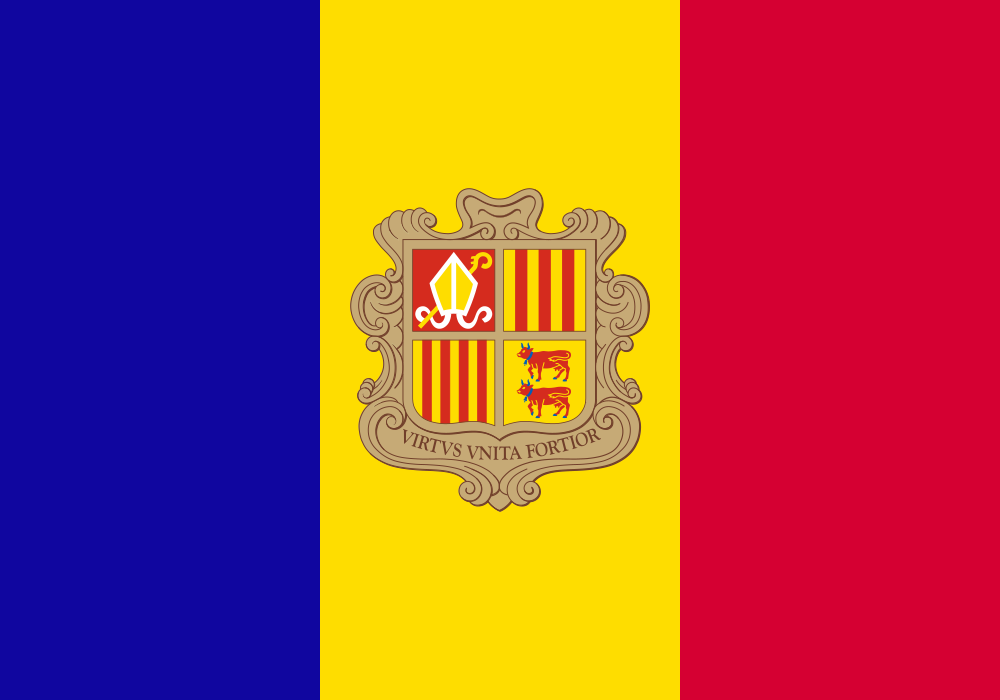
Andorra
Andorra is a small Pyrenean country built around mountain roads, ski resorts, Romanesque churches, and thermal baths. It works best as a high-altitude stop between France and Spain, with easy access to Grandvalira, Ordino, and Andorra la Vella.

Austria
Austria blends Vienna's imperial palaces, Salzburg's Mozart and Alps, the Wachau Valley, Hallstatt's lakeside postcard, and some of Europe's best ski infrastructure.
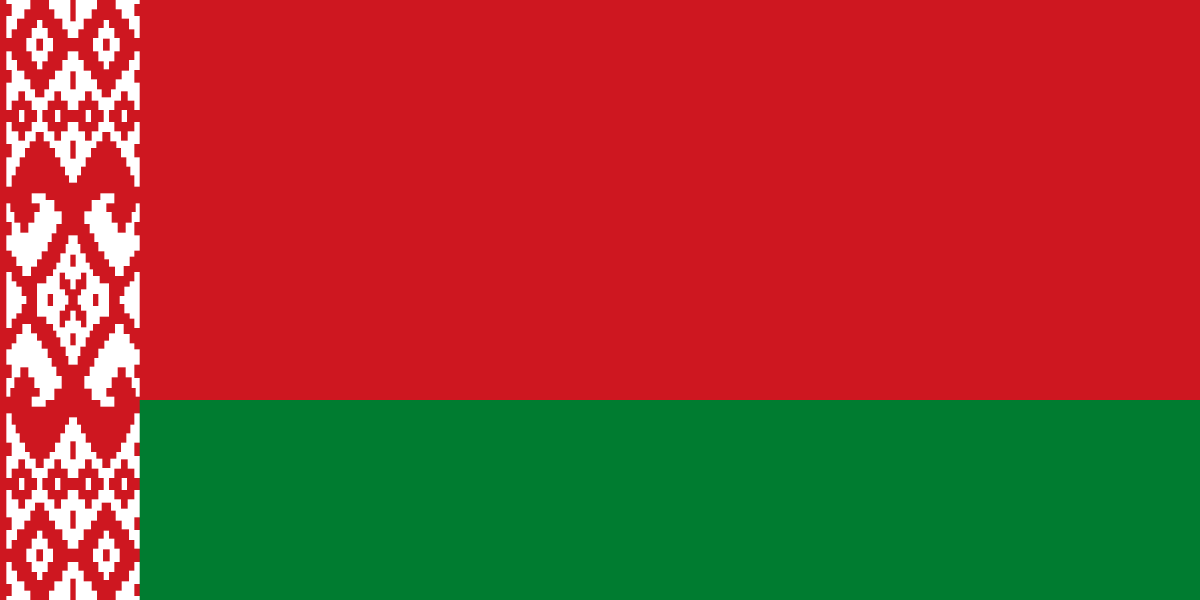
Belarus
Belarus centers on Minsk's broad Soviet-era avenues, Mir and Nesvizh castles, and the ancient forest of Belovezhskaya Pushcha. It is strongest for travelers interested in architecture, history, and quiet countryside rather than resort travel.

Belgium
Belgium is Brussels's EU density, Bruges's fairy-tale canals, Ghent's underrated old town, and the world's deepest beer culture.
Bosnia & Herzegovina
Bosnia and Herzegovina combines Sarajevo's Ottoman and Austro-Hungarian layers, Mostar's stone bridge, mountain villages, and clear rivers for rafting. It is compact, emotional, and one of the Balkans' most rewarding overland trips.

