Why visit
Kinshasa is one of Africa's biggest cities, loud with music, traffic, markets, and the Congo River. It is complex rather than easy, but it is central to Congolese rumba, politics, and regional culture.
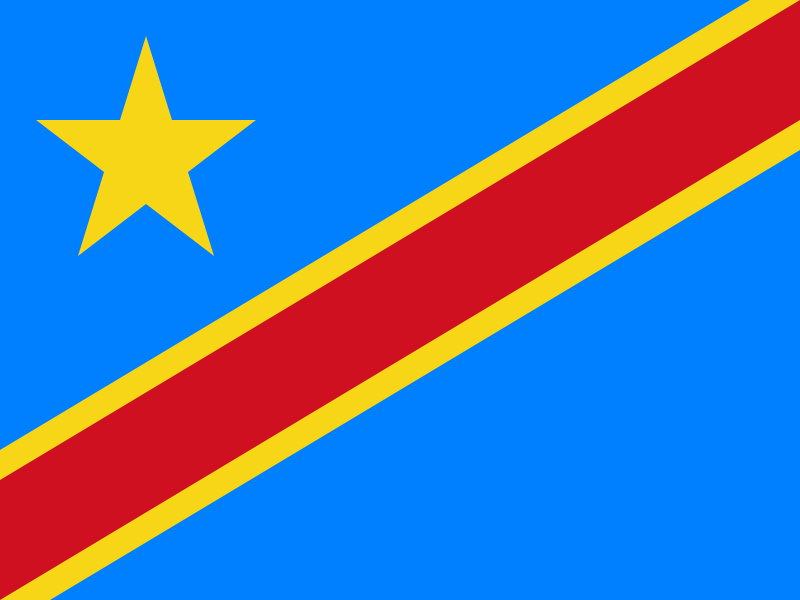
Why visit
Kinshasa is one of Africa's biggest cities, loud with music, traffic, markets, and the Congo River. It is complex rather than easy, but it is central to Congolese rumba, politics, and regional culture.
How to use this result
Kinshasa is useful when you want a city-level starting point in Democratic Republic of the Congo. Check whether the capital is the best arrival city, a practical transfer point, or mainly a geography and planning reference.
Before planning around Kinshasa, compare airport access, local transport, time zone, neighborhood choices, weather, safety guidance, and whether another city in Democratic Republic of the Congo better matches the trip style.
Kinshasa at a glance
City population
16.0 million
Elevation
281 m
922 ft
Time zone
UTC+1
Africa/Kinshasa
Airport
FIH
Ndjili International Airport
Democratic Republic of the Congo at a glance
Country center
0.0°, 25.0°
Coast
Has coastline
Traffic
Drives on the right
Time zones
Spans 2 time zones
Country area
2,344,858 km²
905,354 mi²
Subregion
Middle Africa
Currency
Congolese franc (FC)
CDF
Dial
+243
Languages
French, Kikongo, Lingala
Demonym
Congolese
Internet
.cd
UN
Member state
ISO code
CD / COD
Where in the world
0.0° - 25.0°
Click the map to open in Google Maps. Outline via svg-maps/world - CC BY 4.0
Did you know
Bordering Democratic Republic of the Congo
Traveler notes
Plan checks
Explore more
Facts last reviewed June 2026 against GeoNames and national statistics sources. See the editorial policy for how destination data is maintained.
Frequently asked about Kinshasa
Kinshasa is the capital city of Democratic Republic of the Congo. It has a population of about 16.0 million. The city sits at 281 m above sea level.
Kinshasa uses the Congolese franc (FC), ISO code CDF.
The primary languages are French, Kikongo and Lingala.
The calling code is +243.
Jun–Sep. Check current weather and local events before booking.
Ndjili International Airport (IATA: FIH).
Other Africa destinations
Burkina Faso
Burkina Faso is known for the Gorom-Gorom market, the painted houses of Tiebele, and FESPACO in Ouagadougou, Africa's biggest film festival. Security conditions have curtailed most travel in recent years; check current conditions carefully.
Burundi
Burundi sits on the northeast shore of Lake Tanganyika, the world's second-deepest lake. Drumming is the cultural signature: the ritual dance of the royal drum is UNESCO-listed. Tourism remains small-scale.
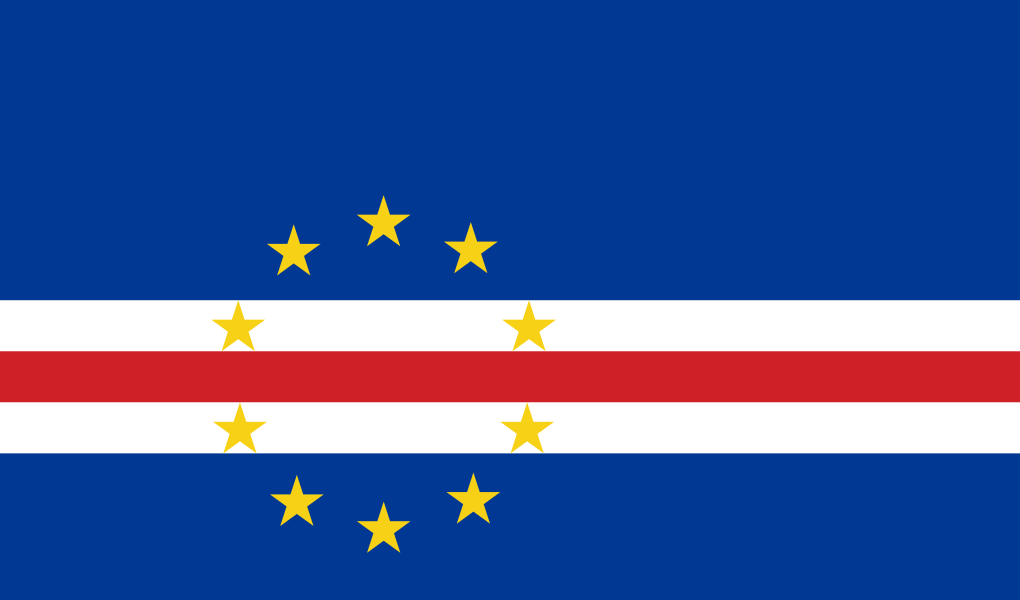
Cape Verde
Cape Verde is ten volcanic islands off West Africa with a Creole culture closer to Brazil than to the mainland. Sal and Boa Vista carry the beach resorts, Santo Antão has the canyon hiking, and Fogo is an active volcano you can climb.
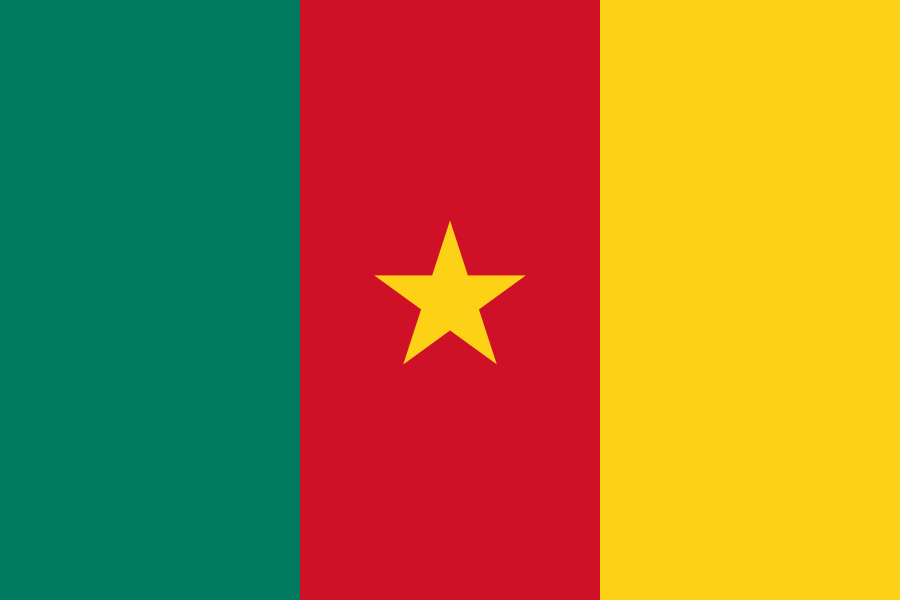
Cameroon
Cameroon compresses the continent into one country: Atlantic beaches at Kribi, rainforest gorillas, Sahel mosques in the north, and Mount Cameroon, West Africa's highest peak, rising straight from the sea.
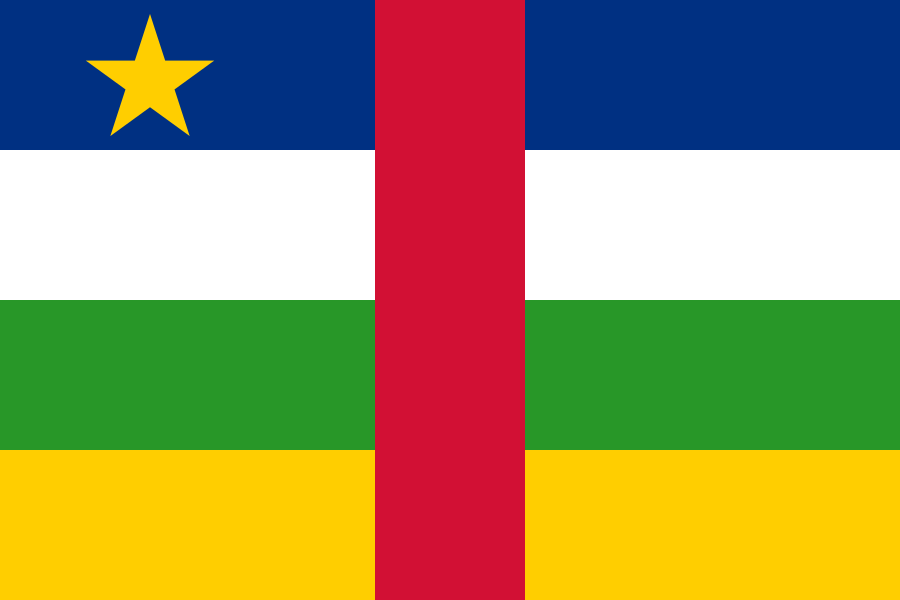
Central African Republic
The Central African Republic holds Dzanga-Sangha, where forest elephants and western lowland gorillas gather at jungle clearings. Ongoing instability means the few visitors who come fly directly into the reserve with specialist operators.
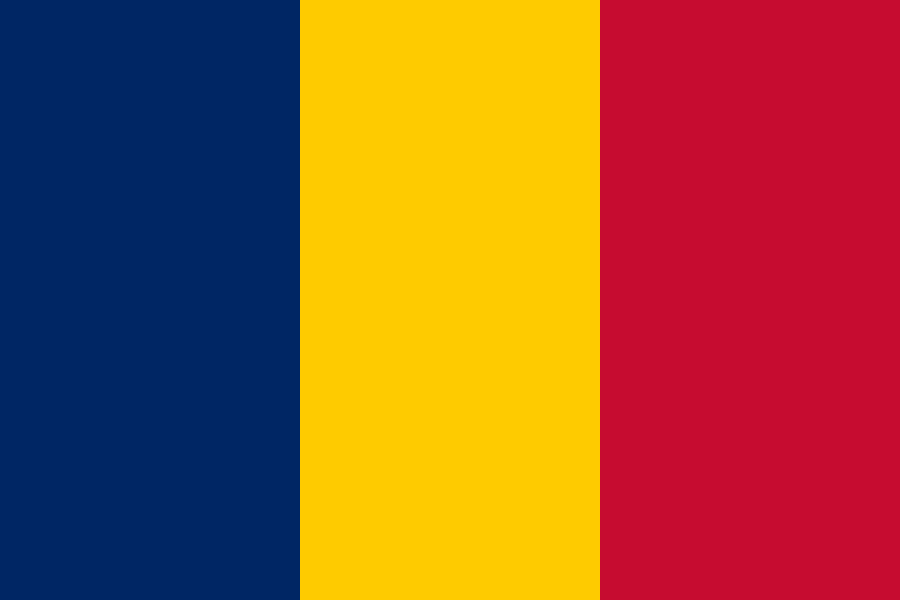
Chad
Chad's far north hides the Ennedi Plateau, a sandstone labyrinth of arches and gueltas, and the Lakes of Ounianga, a UNESCO chain of desert lakes. Zakouma National Park in the south has staged one of Africa's great elephant recoveries.