Why visit
The Marshall Islands are a chain of coral atolls known for Majuro, outer-island lagoons, World War II wrecks, and Bikini Atoll's complex nuclear-test history. Travel is niche, ocean-focused, and logistically deliberate.
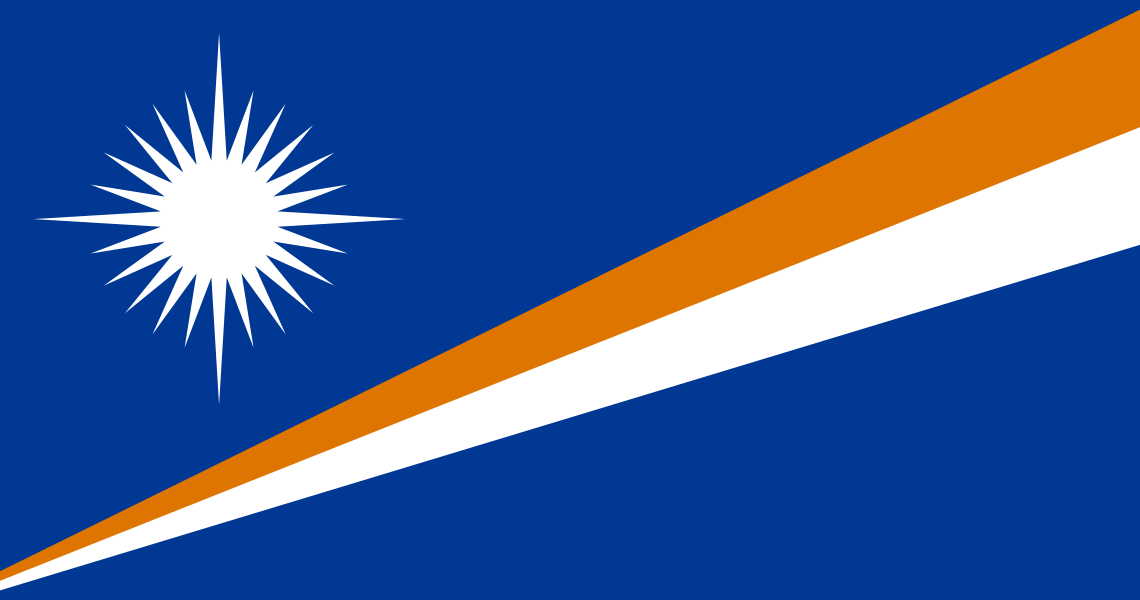
Country - Oceania
Why visit
The Marshall Islands are a chain of coral atolls known for Majuro, outer-island lagoons, World War II wrecks, and Bikini Atoll's complex nuclear-test history. Travel is niche, ocean-focused, and logistically deliberate.
How to use this result
Marshall Islands works best as a first-pass travel idea. Start with the region, season, and themes on this page, then compare flights, entry rules, safety guidance, and local transport before treating it as a real option.
Use Majuro as the administrative starting point, then check whether the strongest trip idea is actually the capital, a coastal area, a nature route, or another city in Marshall Islands.
At a glance
Location
9.0°, 168.0°
Coast
Has coastline
Traffic
Drives on the right
Time zones
Single time zone
Country area
181 km²
70 mi²
Country population
42k
232/km²
Subregion
Micronesia
Currency
United States dollar ($)
USD
Dial
+692
Languages
English, Marshallese
Demonym
Marshallese
Internet
.mh
UN
Member state
ISO code
MH / MHL
Where in the world
9.0° - 168.0°
Click the map to open in Google Maps. Outline via svg-maps/world - CC BY 4.0
Did you know
Traveler notes
Plan checks
Explore more
Facts last reviewed June 2026 against GeoNames and national statistics sources. See the editorial policy for how destination data is maintained.
Frequently asked about Marshall Islands
Majuro is the capital of Marshall Islands.
Marshall Islands uses the United States dollar ($), ISO code USD.
The primary languages are English and Marshallese.
No, Marshall Islands has a coastline.
The calling code is +692.
Dec–Apr. Check current weather and local events before booking.
Other Oceania destinations
Palau
Palau is a conservation-focused Pacific destination known for the Rock Islands, Jellyfish Lake, Blue Corner diving, and clear lagoons. It is one of the world's strongest choices for reef, kayak, and dive travel.
Papua New Guinea
Papua New Guinea is culturally and biologically vast, with the Kokoda Track, Sepik River, Mount Hagen singsing, island diving, and hundreds of languages. It is rewarding but complex, best approached with careful local logistics.

Samoa
Samoa is a Polynesian country of reef beaches, lava fields, waterfalls, village life, and fale stays. Upolu gives the easiest entry, while Savai'i feels slower and more traditional.
Solomon Islands
The Solomon Islands are a chain of rainforest islands, lagoons, cultural villages, and World War II history. Guadalcanal, Marovo Lagoon, and Gizo shape the core route for diving, kayaking, and history-focused travel.

Tonga
Tonga is a Polynesian kingdom of limestone caves, blowholes, reef islands, and seasonal humpback whales. Vava'u and Ha'apai are the classic island groups for sailing, snorkeling, and slower Pacific travel.
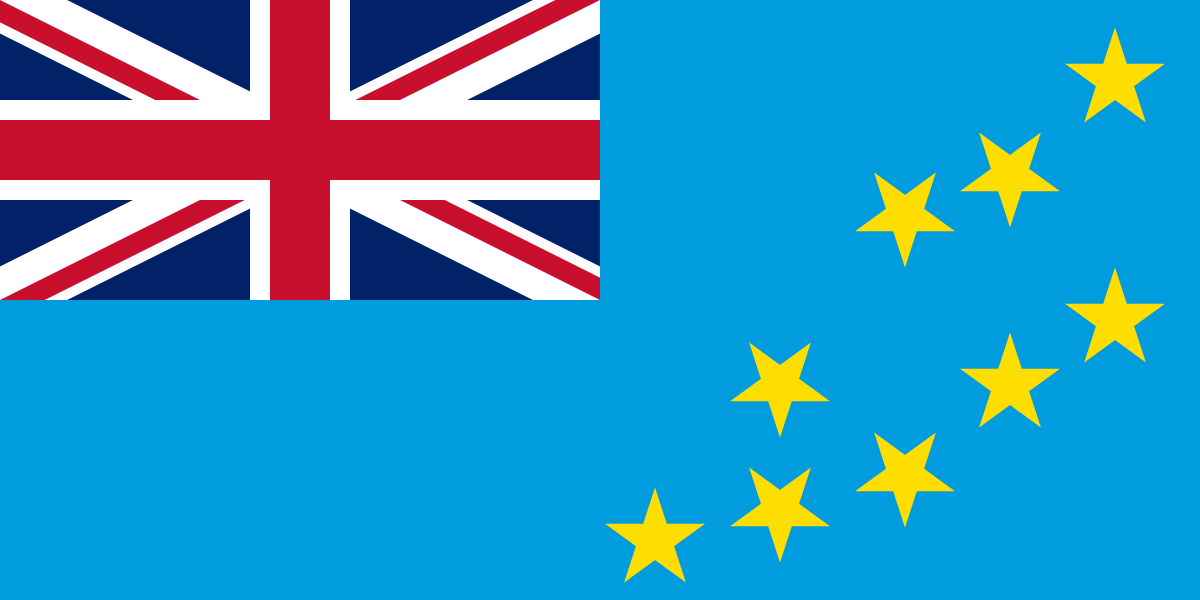
Tuvalu
Tuvalu is a tiny Pacific atoll nation centered on Funafuti lagoon, community life, and the realities of low-lying island geography. It is not a resort destination; its value is human scale, remoteness, and climate context.