Why visit
Kosovo is young, mountainous, and easy to combine with Albania, North Macedonia, or Montenegro. Pristina brings cafe culture and contemporary history, while Prizren, Rugova Canyon, and Ottoman bridges give the trip depth.
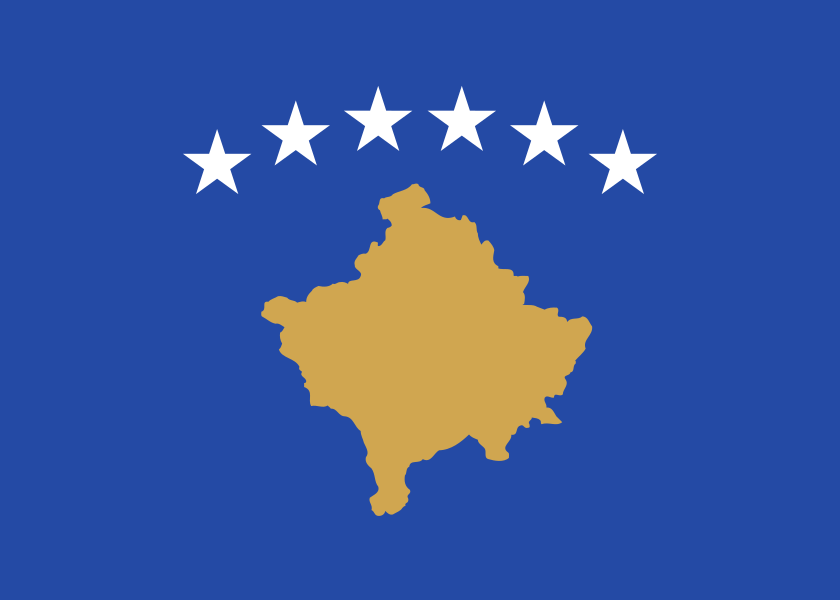
Country - Europe
Why visit
Kosovo is young, mountainous, and easy to combine with Albania, North Macedonia, or Montenegro. Pristina brings cafe culture and contemporary history, while Prizren, Rugova Canyon, and Ottoman bridges give the trip depth.
How to use this result
Kosovo works best as a first-pass travel idea. Start with the region, season, and themes on this page, then compare flights, entry rules, safety guidance, and local transport before treating it as a real option.
Use Pristina as the administrative starting point, then check whether the strongest trip idea is actually the capital, a coastal area, a nature route, or another city in Kosovo.
At a glance
Location
42.7°, 21.2°
Coast
Landlocked
Traffic
Drives on the right
Time zones
Single time zone
Country area
10,908 km²
4,212 mi²
Subregion
Southeast Europe
Currency
Euro (€)
EUR
Dial
+383
Languages
Albanian, Serbian
Demonym
Kosovar
Internet
.xk
ISO code
XK / UNK
Where in the world
42.7° - 21.2°
Click the map to open in Google Maps. Outline via svg-maps/world - CC BY 4.0
Did you know
Bordering Kosovo
Traveler notes
Plan checks
Explore more
Facts last reviewed June 2026 against GeoNames and national statistics sources. See the editorial policy for how destination data is maintained.
Frequently asked about Kosovo
Pristina is the capital of Kosovo.
Kosovo uses the Euro (€), ISO code EUR.
The primary languages are Albanian and Serbian.
Yes, Kosovo is landlocked: it has no sea coastline.
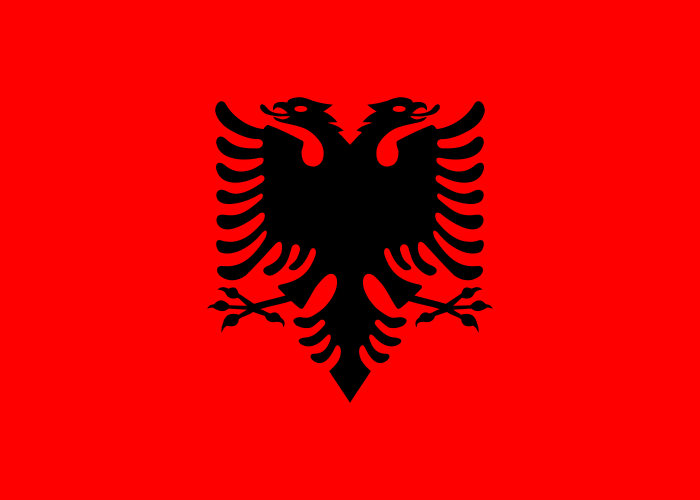
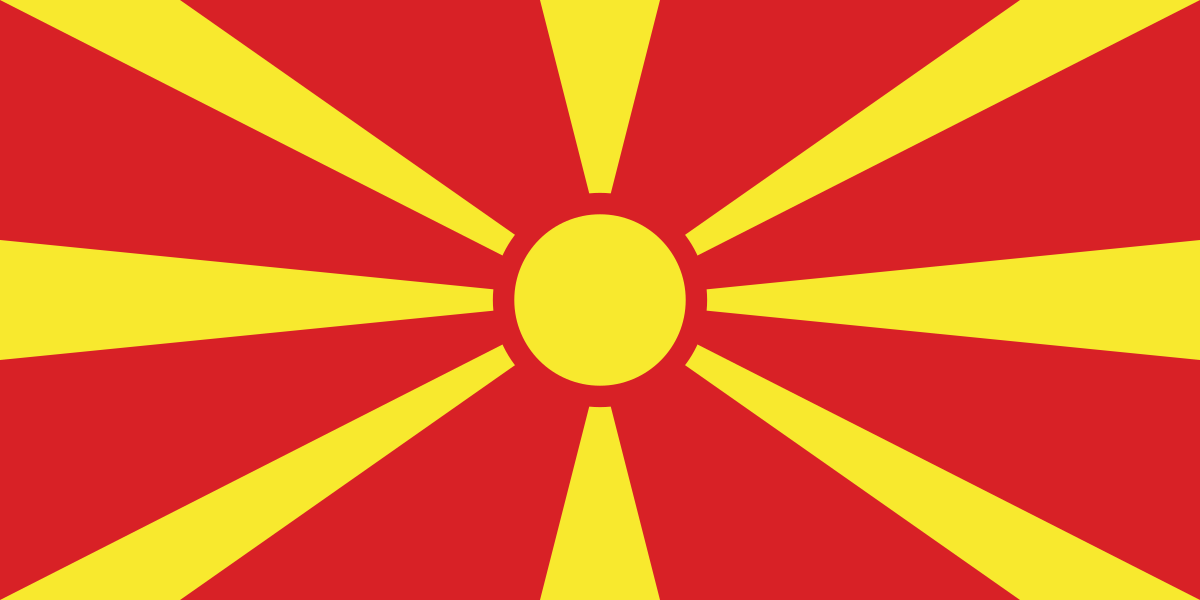
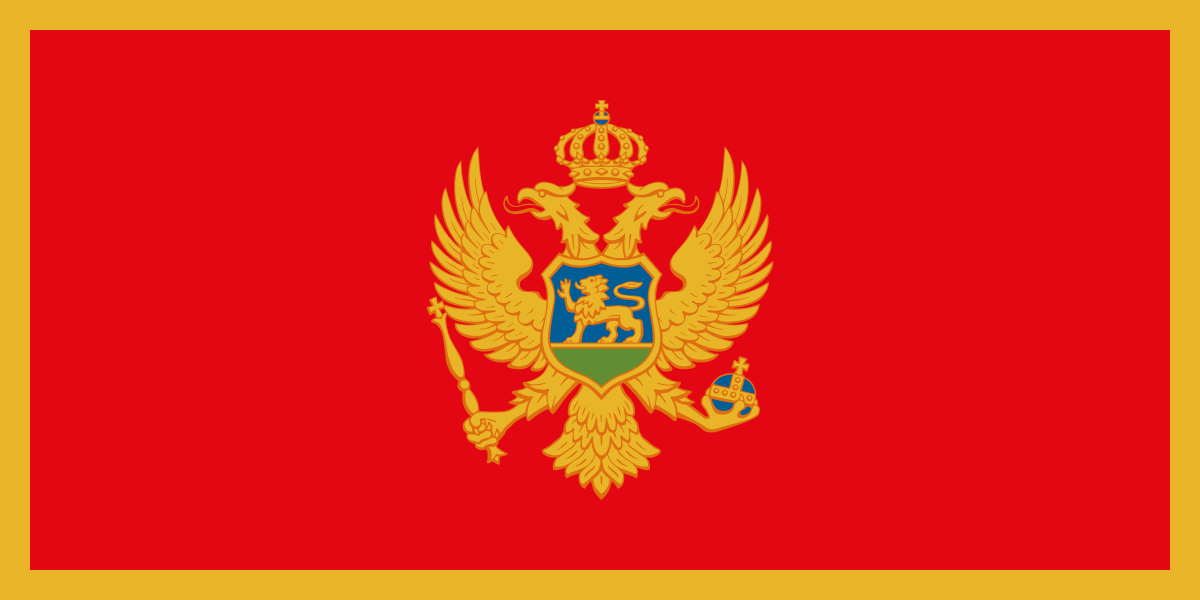
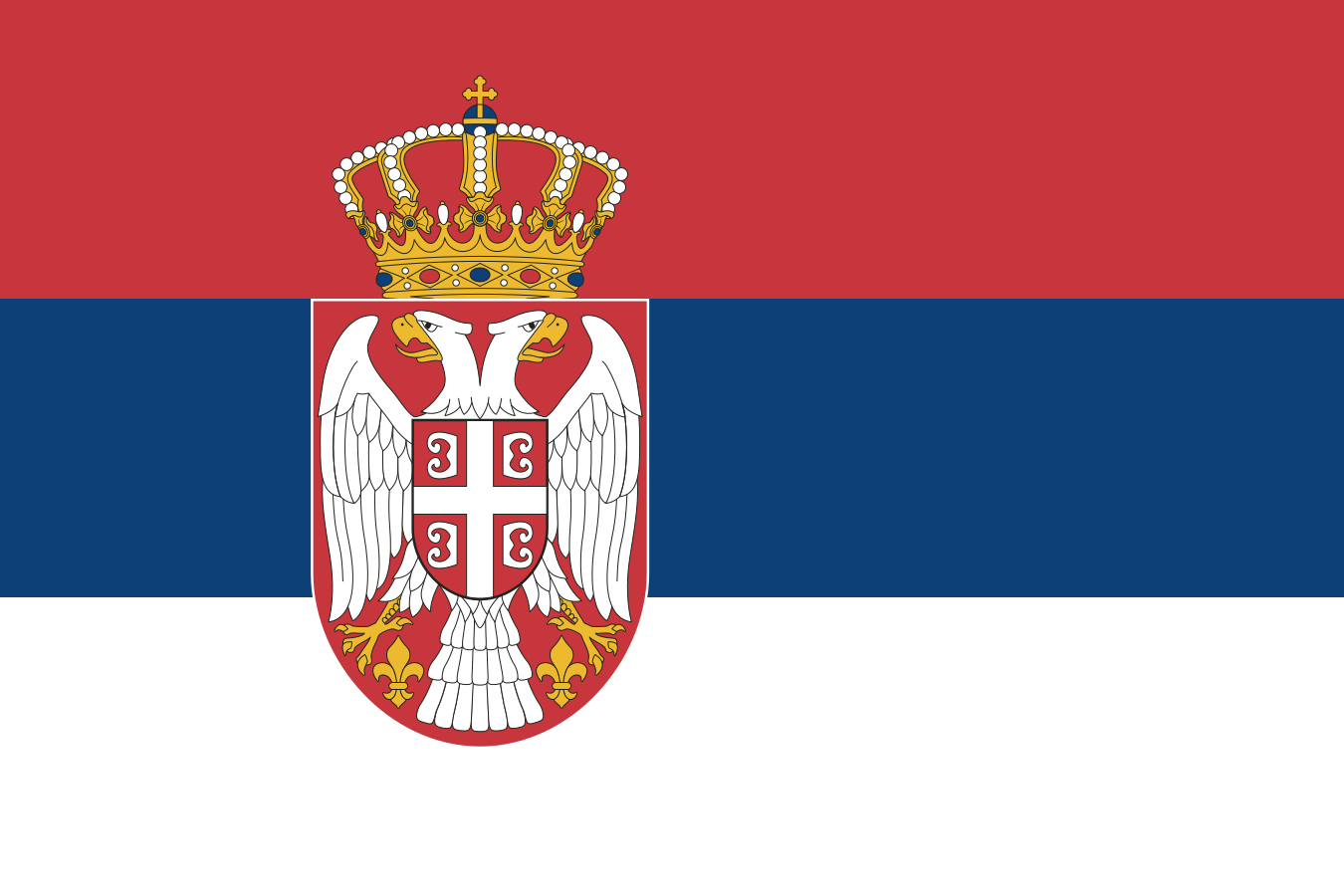
Kosovo borders Albania, North Macedonia, Montenegro, Serbia.
The calling code is +383.
May–Oct. Check current weather and local events before booking.
Other Europe destinations

United Kingdom
The UK covers London's world-capital culture, Scottish Highlands wilderness, Welsh castles, and the Lake District. Compact but varied, easy to combine in two weeks.
Vatican City
Vatican City is the world's smallest state, but it contains St. Peter's Basilica, the Vatican Museums, the Sistine Chapel, and major archives of Catholic history. It is best treated as a focused Rome day, not a separate country trip.

Barcelona
Barcelona pairs Gaudí's Sagrada Família, Park Güell, and Casa Batlló with Gothic Quarter alleys, a walkable beach, and one of Europe's strongest food cities.
Seville
Seville holds the world's largest Gothic cathedral, the Alcázar's Moorish palace, flamenco peñas, and Semana Santa. The richest Holy Week in Spain.
Granada
Granada is the Alhambra, the last Moorish palace-city in Iberia, above whitewashed Albaicín lanes. One of the few Spanish cities where tapas still arrive free with every drink, with Sierra Nevada skiing an hour away.
San Sebastián
San Sebastián has more Michelin stars per capita than any city on earth, a crescent of sand at La Concha, and pintxos bars that are closer to an Olympic sport than dining.