Why visit
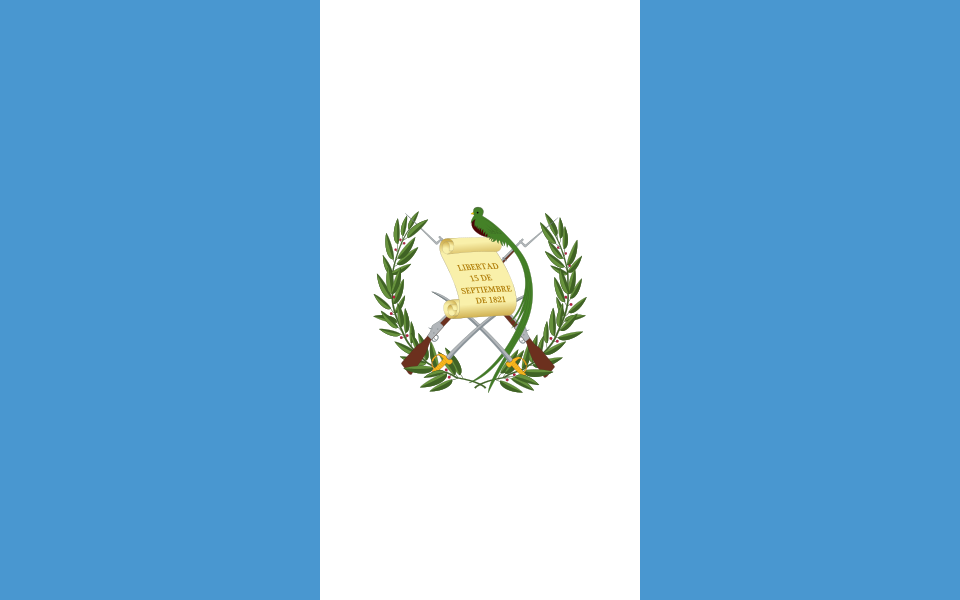
Guatemala City is the country's largest urban center, often used for logistics but worth time for museums, markets, and modern Maya context before Antigua, Lake Atitlan, or Tikal routes.
Why visit
Guatemala City is the country's largest urban center, often used for logistics but worth time for museums, markets, and modern Maya context before Antigua, Lake Atitlan, or Tikal routes.
How to use this result
Guatemala City is useful when you want a city-level starting point in Guatemala. Check whether the capital is the best arrival city, a practical transfer point, or mainly a geography and planning reference.
Before planning around Guatemala City, compare airport access, local transport, time zone, neighborhood choices, weather, safety guidance, and whether another city in Guatemala better matches the trip style.
Guatemala City at a glance
City population
995k
Elevation
1,508 m
4,948 ft
Time zone
UTC-6
America/Guatemala
Airport
GUA
La Aurora International Airport
Guatemala at a glance
Country center
15.5°, -90.3°
Coast
Has coastline
Traffic
Drives on the right
Time zones
Single time zone
Country area
108,889 km²
42,042 mi²
Country population
18.0 million
165/km²
Subregion
Central America
Currency
Guatemalan quetzal (Q)
GTQ
Dial
+502
Language
Spanish
Demonym
Guatemalan
Internet
.gt
UN
Member state
ISO code
GT / GTM
Where in the world
15.5° - -90.3°
Click the map to open in Google Maps. Outline via svg-maps/world - CC BY 4.0
Did you know
Bordering Guatemala
Traveler notes
Plan checks
Explore more
Facts last reviewed June 2026 against GeoNames and national statistics sources. See the editorial policy for how destination data is maintained.
Frequently asked about Guatemala City
Guatemala City is the capital city of Guatemala. It has a population of about 995k. The city sits at 1,508 m above sea level.
Guatemala City uses the Guatemalan quetzal (Q), ISO code GTQ.
The primary language is Spanish.
The calling code is +502.
Nov–Apr. Check current weather and local events before booking.
La Aurora International Airport (IATA: GUA).
Yes, Guatemala City sits at 1,508 m (4,948 ft). Give yourself a day or two to acclimatize.
Other North America destinations
Dominican Republic
The Dominican Republic is more than resort beaches: Santo Domingo's colonial core, Samaná whale season, Pico Duarte, merengue and bachata, and long Atlantic and Caribbean coastlines. It suits both easy holidays and deeper road trips.
El Salvador
El Salvador is compact and intense: Pacific surf, volcano hikes, Ruta de las Flores towns, coffee farms, and Joya de Cerén, a Maya village preserved by ash. Short distances make it easy to combine several landscapes in one week.
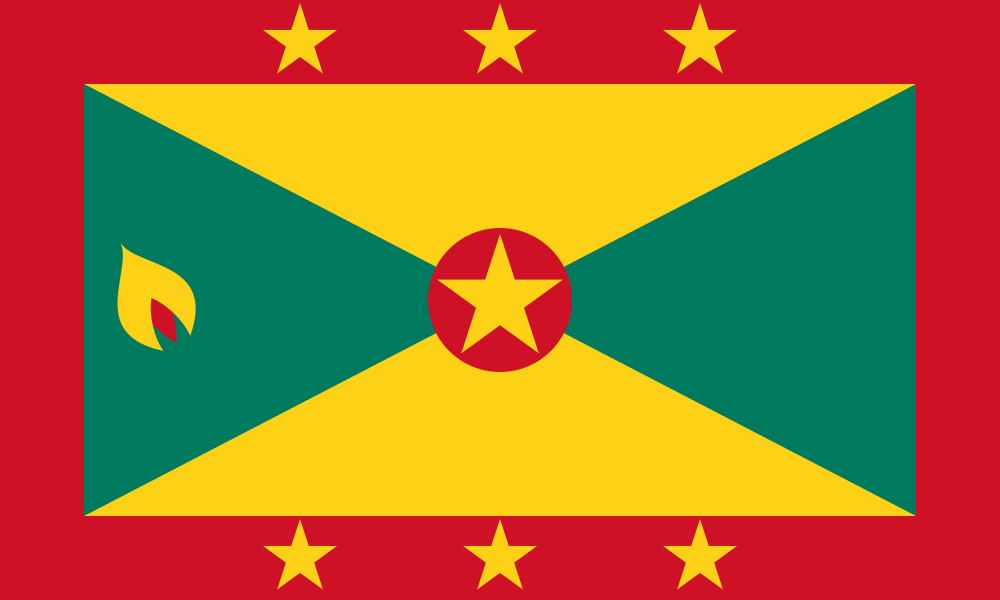
Grenada
Grenada is the spice island, known for nutmeg, Grand Anse Beach, rainforest waterfalls, and a relaxed sailing culture that extends to Carriacou and Petite Martinique. It is a strong Caribbean choice for food, beach time, and diving.
Guatemala
Guatemala is Antigua's colonial streets, Lake Atitlán's volcano-rimmed villages, Tikal Mayan ruins in the jungle, and some of Latin America's most vibrant textile traditions.
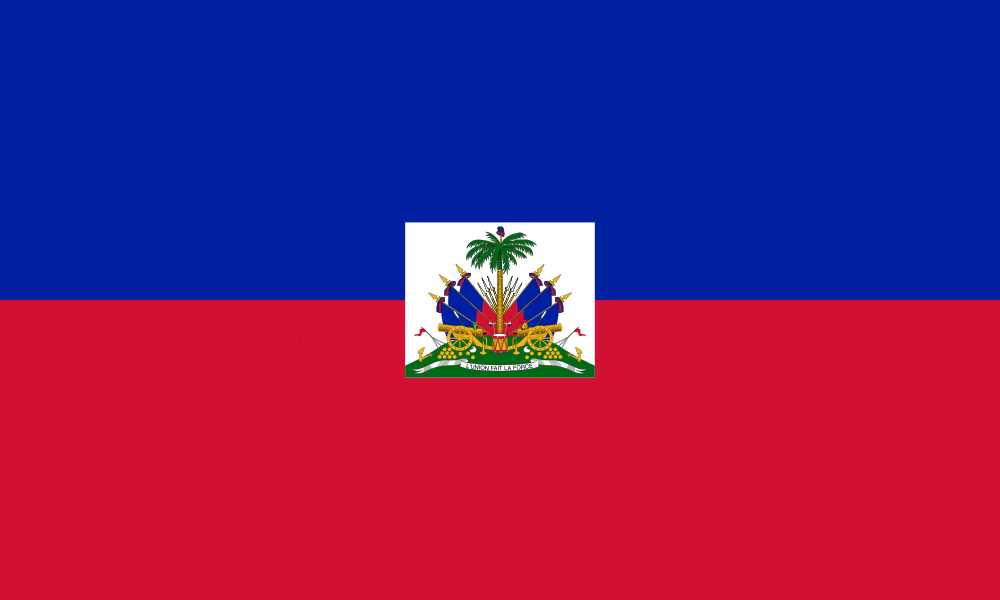
Haiti
Haiti holds major Caribbean heritage: the Citadelle Laferrière, Sans-Souci Palace, Jacmel's arts scene, mountain landscapes, and Vodou traditions. Current instability makes ordinary travel difficult, but the cultural importance is substantial.
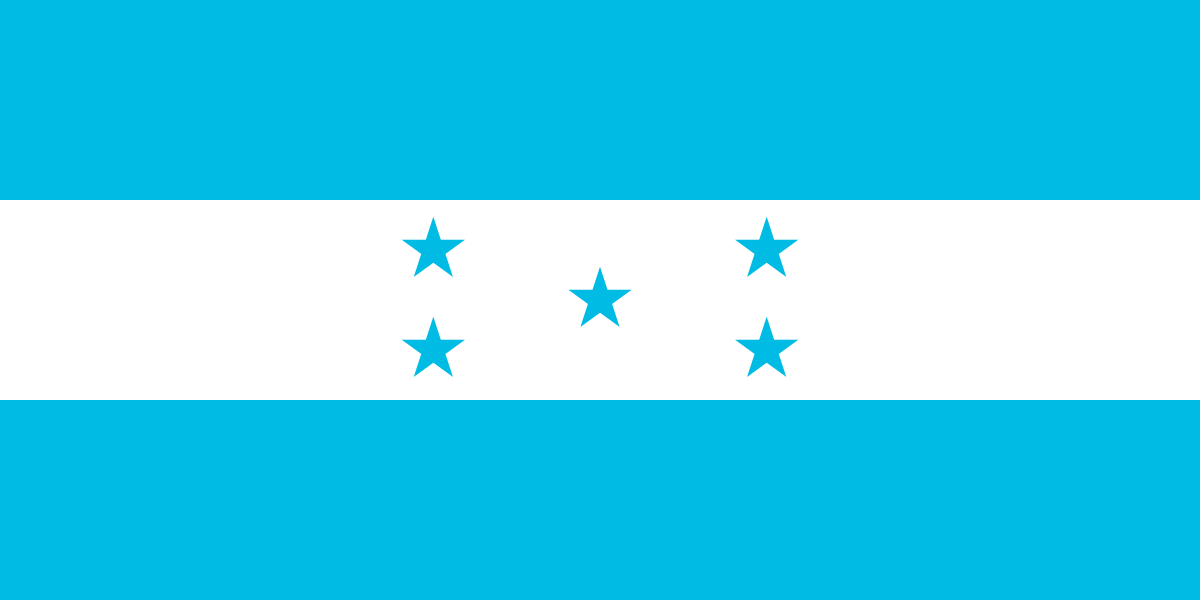
Honduras
Honduras combines Copán's Maya sculpture, Bay Islands diving, Pico Bonito rainforest, coffee highlands, and Caribbean coast communities. The best itineraries usually pair archaeology with reef time.